


Trace any lot in seconds, not days.
Approved suppliers and their COAs, verified receiving, append-only lot genealogy, and FSMA 204 Critical Tracking Events emitted as you produce. When a retailer or the FDA asks where a lot went, the answer is one view, not a week of spreadsheet archaeology.
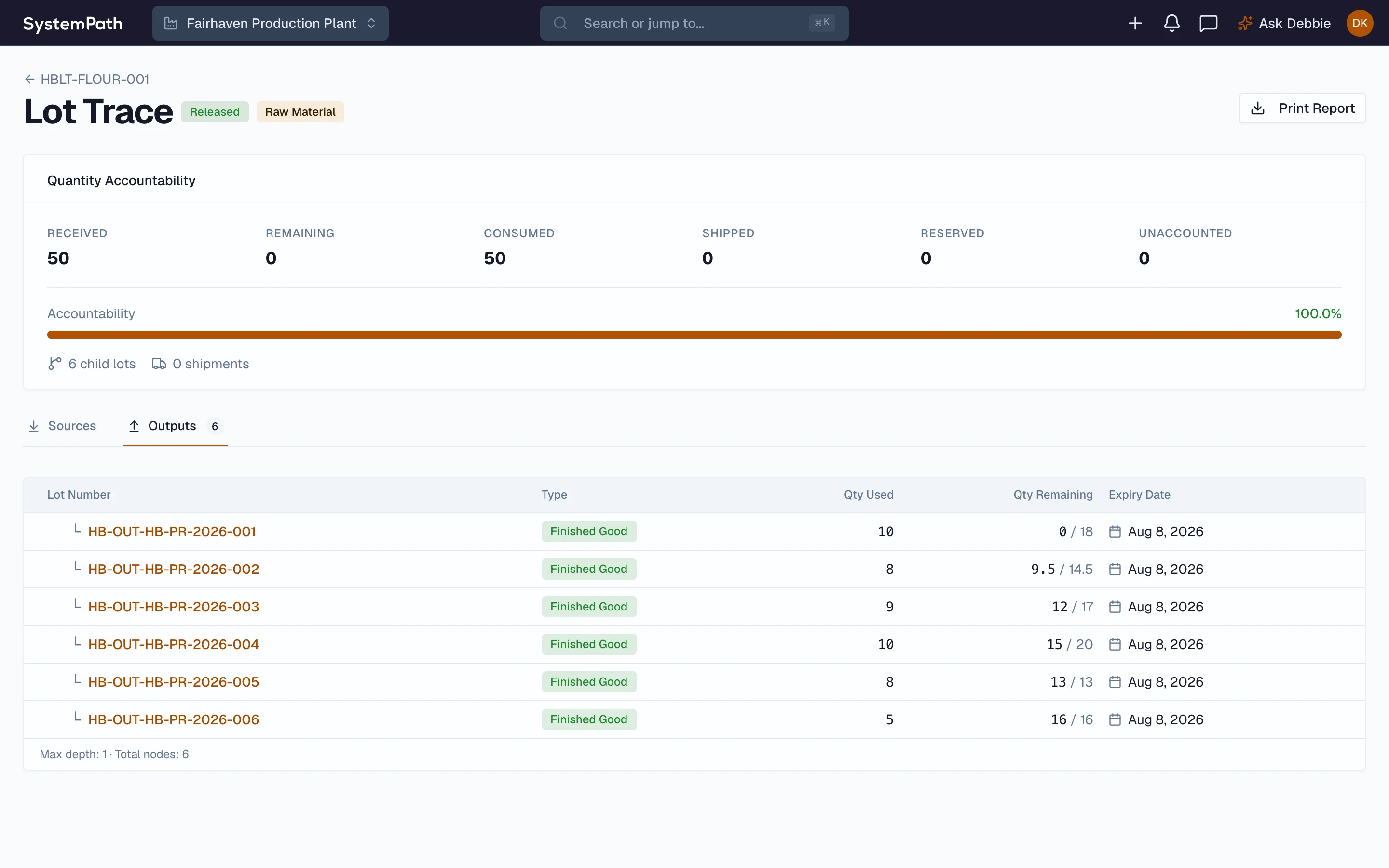
Approved suppliers, current documents, checked before use.
Each supplier carries its approval status, audit frequency and next audit date, questionnaires, qualifications, and certificates of analysis, each COA tied to the lot it covers with its own expiry and pass state. A raw-material lot can require a linked, passing COA before it is released for use, so a missing certificate surfaces before the line runs rather than during an audit. A receiving non-conformance opens a record tied to the supplier, so a pattern is visible over time.
- Approval status, audit frequency, and the next audit date
- Certificates tied to the lot they cover, with expiry and pass state
- A current certificate required before a material is used
- Receiving non-conformances tied to the supplier record
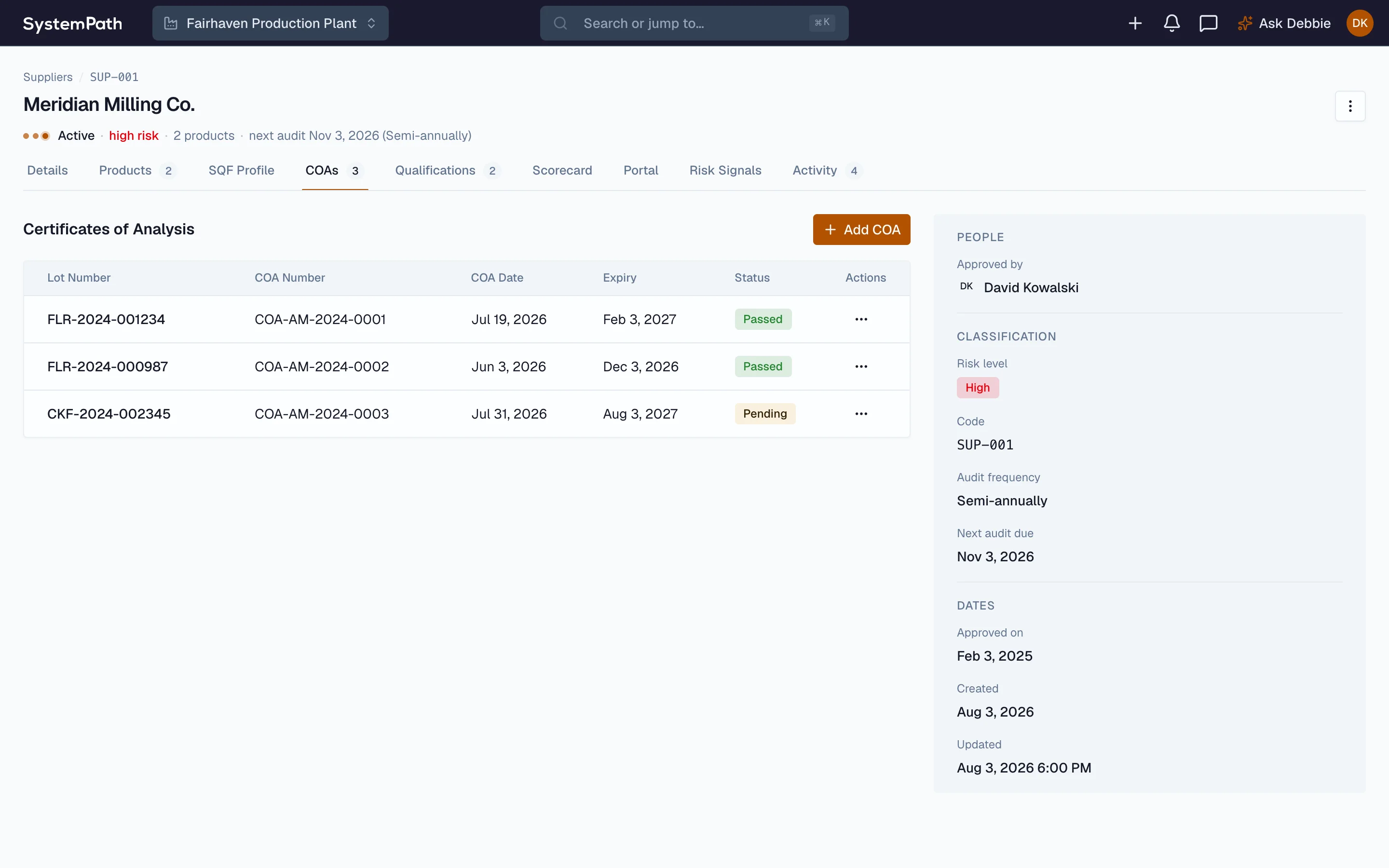
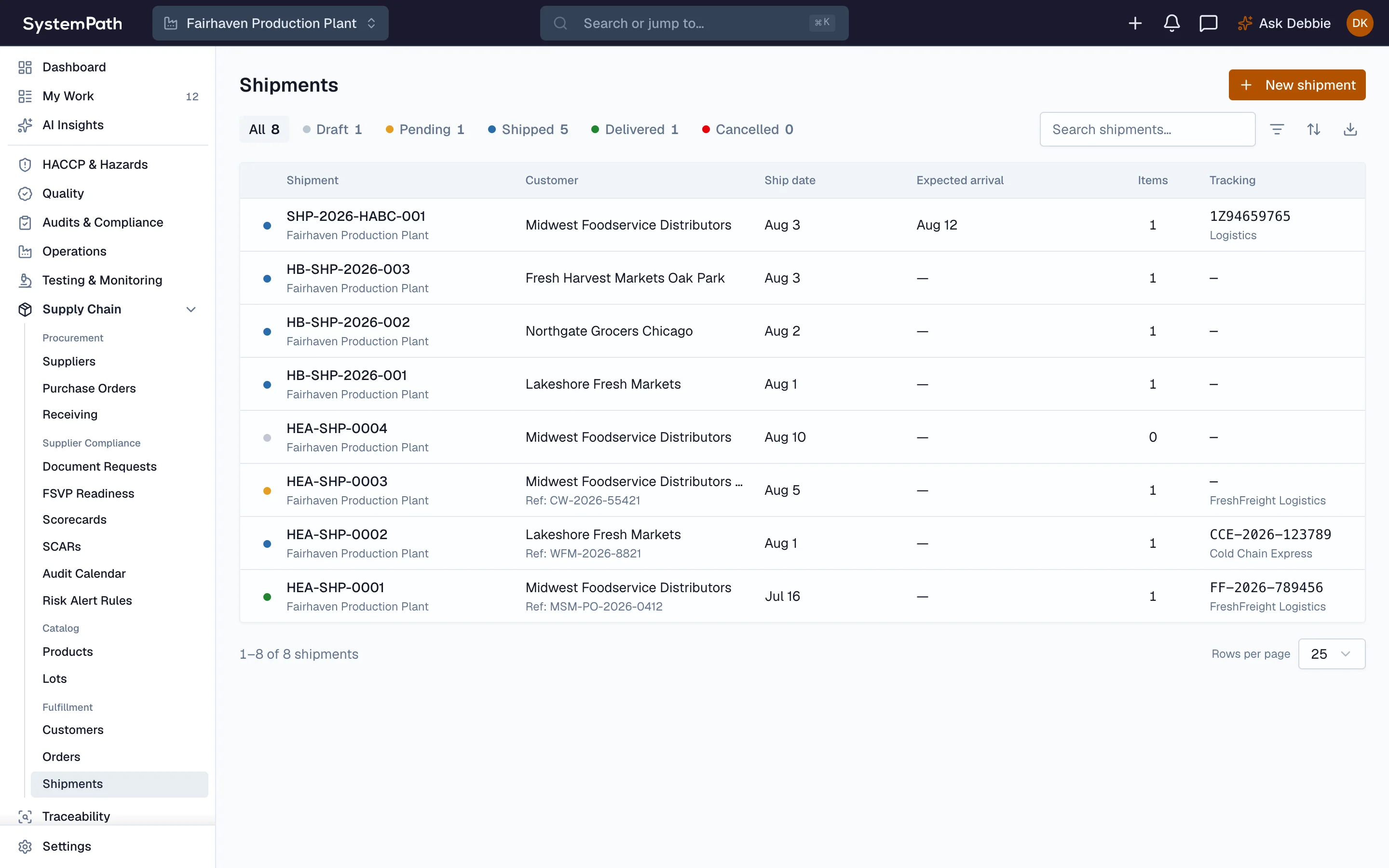
The order file and the trace are the same record.
A customer order allocates against real inventory, picking follows first-expired-first-out with lot identity preserved, and dispatch records the shipping Critical Tracking Event with an EPCIS 2.0 export for trading partners. The order moves through approval, confirmation, shipment, and closure with each step attributed, so when a customer asks which lots were on their order, the answer already exists.
- Orders allocated against real inventory
- FEFO and FIFO picking with lot identity preserved
- Approval, confirmation, shipment, and closure on one record
- Shipping CTE recorded at dispatch
- EPCIS 2.0 JSON-LD and the FDA sortable spreadsheet, ready to send
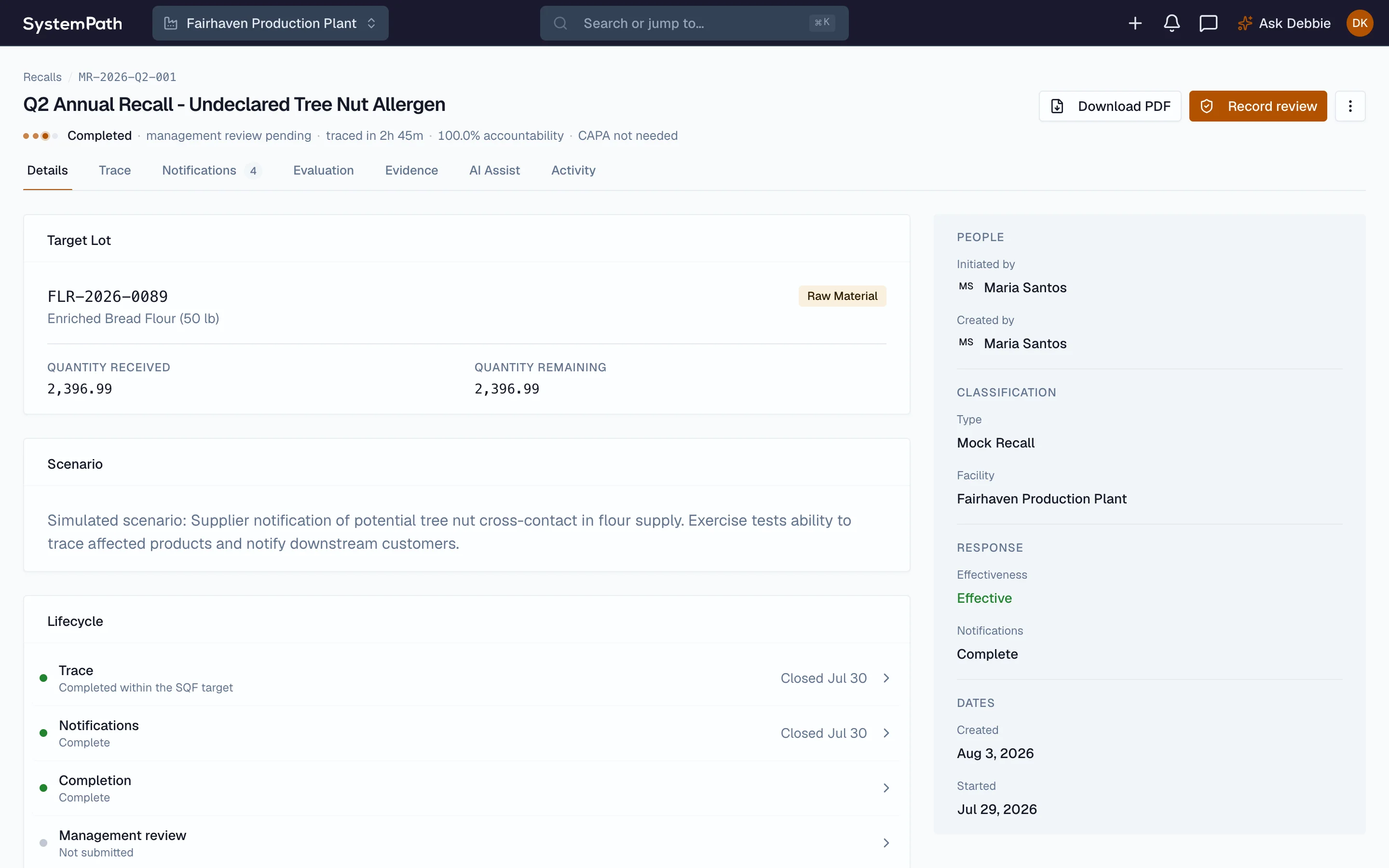
Recall-ready before you ever need to be.
Because the genealogy is built as you produce, the trace is not a project you start when a recall hits. A mock recall runs as its own record: the target lot, the scenario, the trace, the customer notifications, and an effectiveness result, with the elapsed time and the percentage of product accounted for on the record itself. That is the number a certification body asks for, and it is already written down. Enforcement of FSMA 204 is set for July 20, 2028; your records are captured correctly from the first lot.
- Mock recalls run as records, not as a spreadsheet week
- Elapsed trace time and percentage accounted for, on the record
- Customer notifications tracked to completion
- An effectiveness result, and a management review to close it out
- Playbooks built before you need them
Every traceability question an auditor asks, answered before they walk in.
Traceability is audited by picking a lot and pulling on it. The answers are only fast if receiving, production, release, and dispatch all wrote to the same ledger while the work was happening.
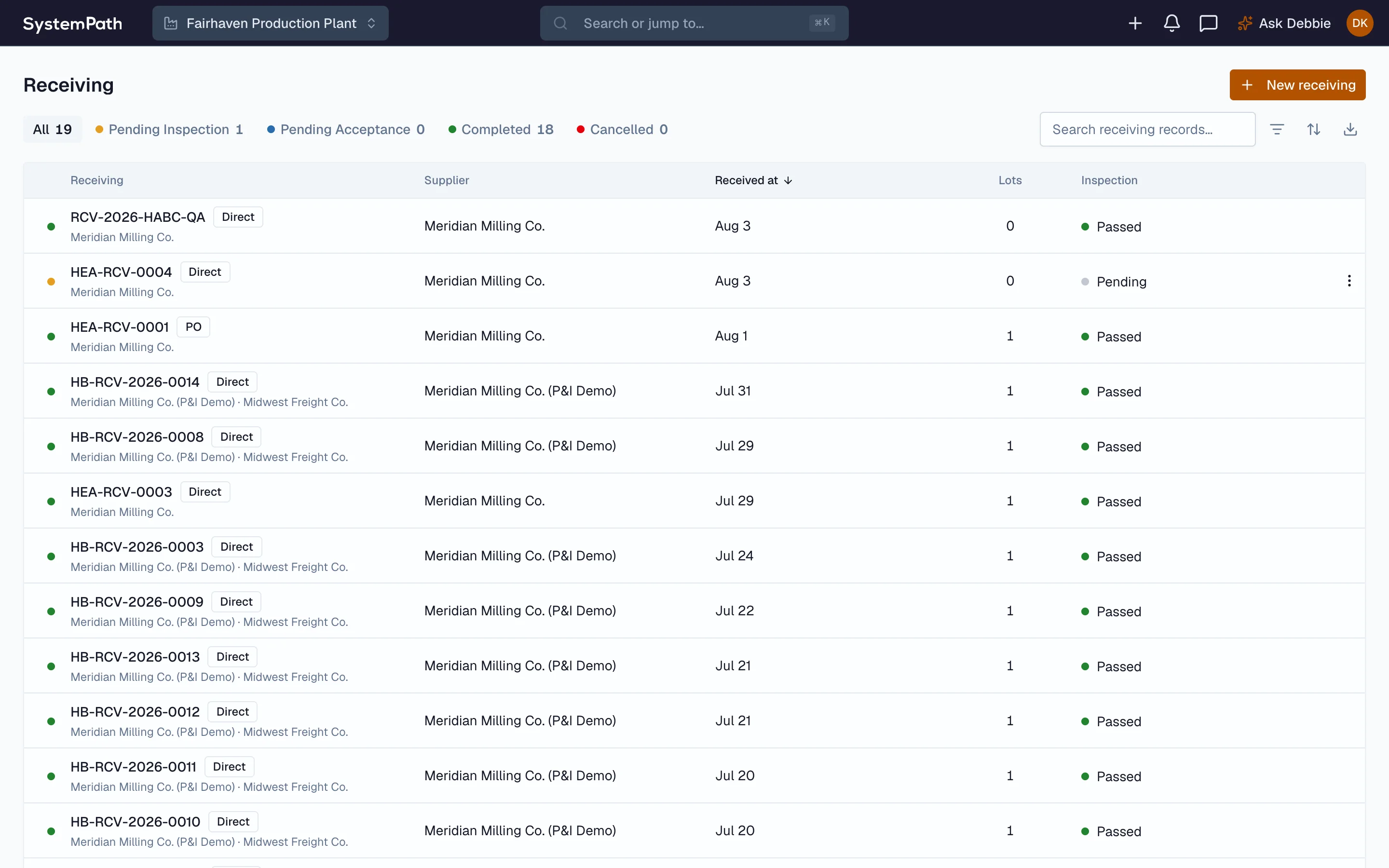
Every receipt ties a lot to its purchase order and its supplier and records the inspection at the dock. Accurate identity from the first moment a material enters the building is what makes everything downstream trustworthy.
Explore Receiving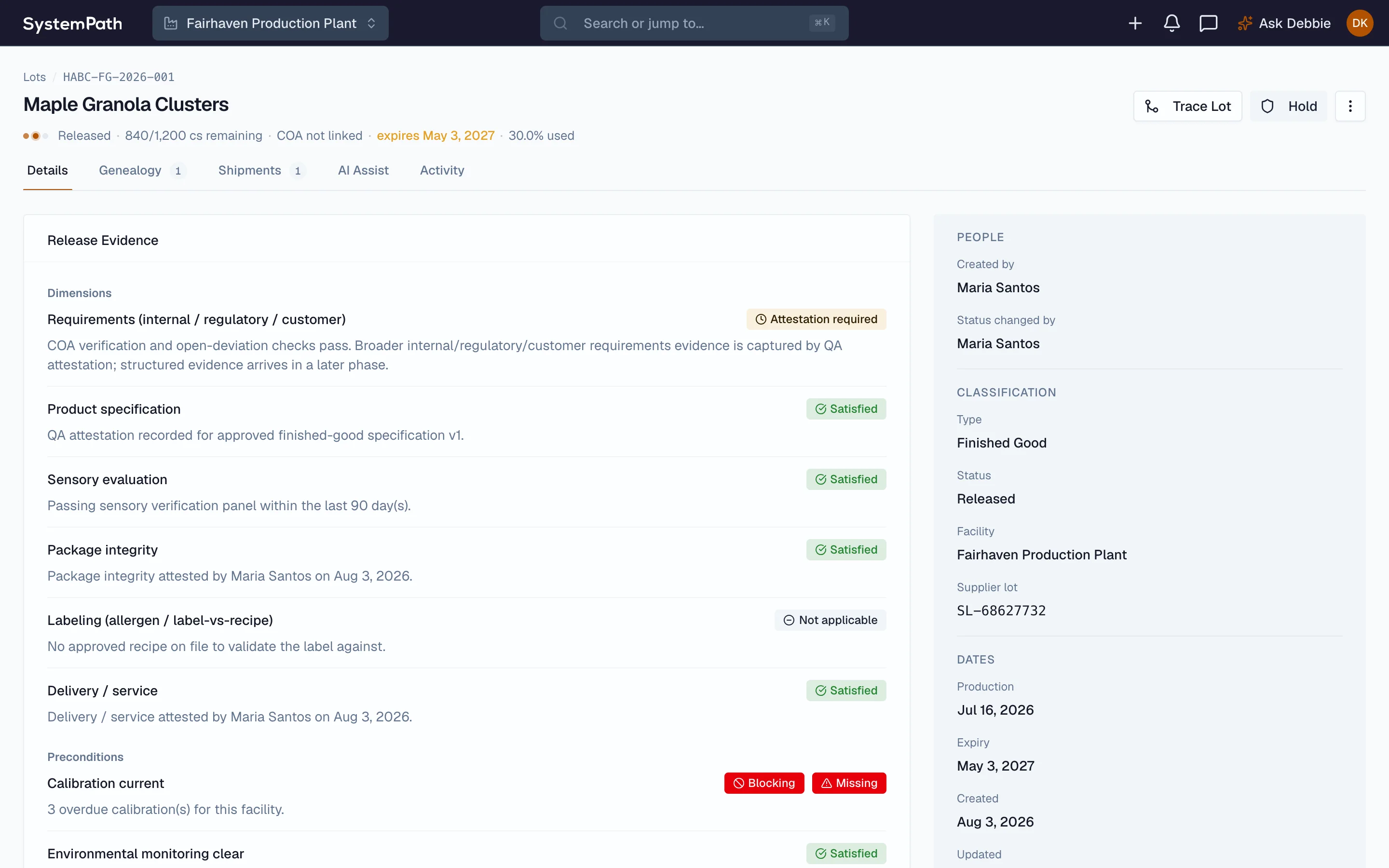
A finished lot carries the evidence behind its release: the quality dimensions it satisfied, who attested to each, and the preconditions that would block it. A blocking precondition is named on the record rather than discovered after dispatch.
Explore Release evidence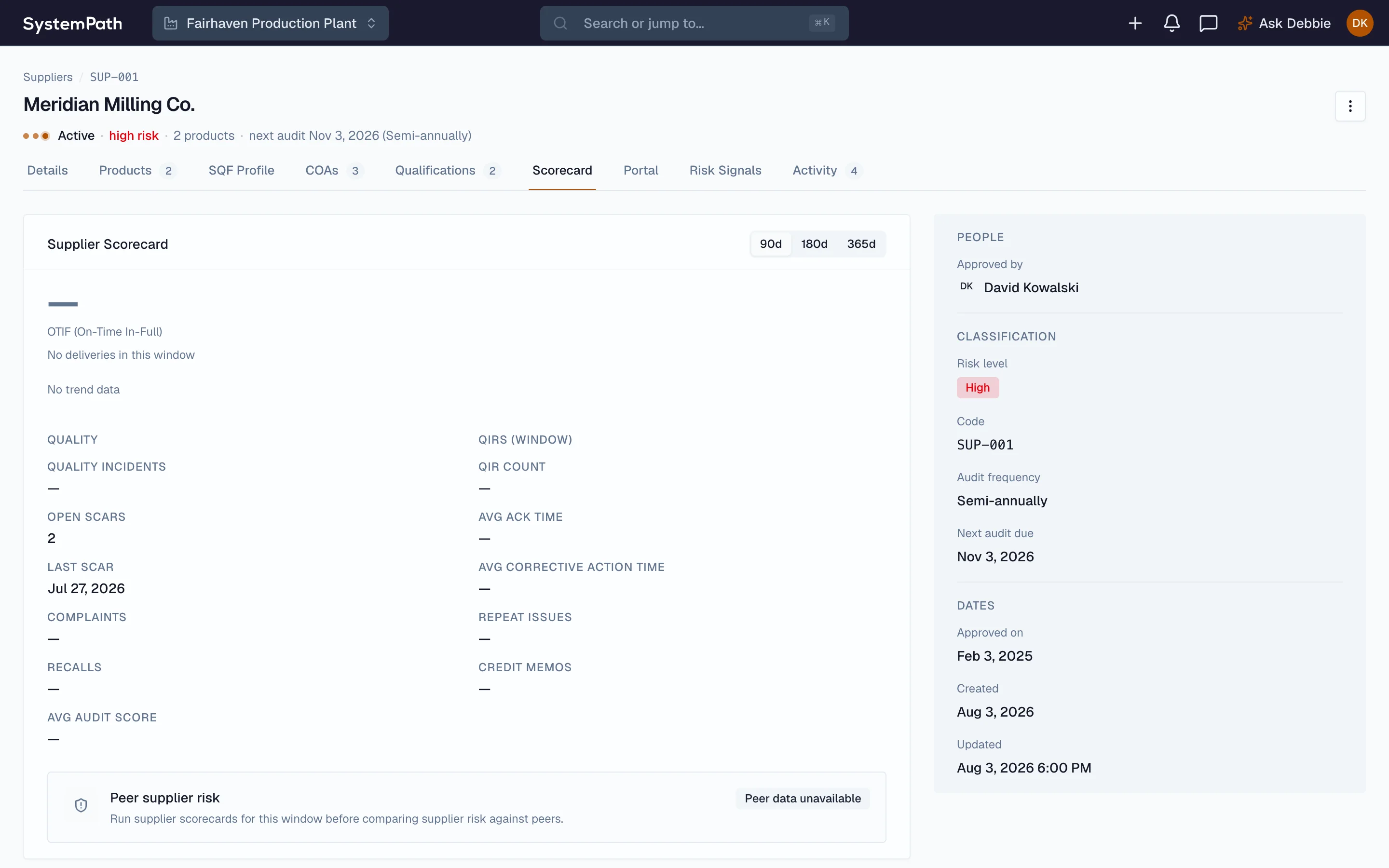
Performance is scored against the supplier over time rather than argued from memory at re-approval, so the conversation starts from a record both sides can see.
Explore Supplier performanceSee a recall trace run in seconds.
A 20-minute walkthrough of supplier management, receiving, orders, and a live recall trace on real data. Bring a lot number.
Prefer the phone? (313) 484-4887
What happens next
Discovery call
About your suppliers, your lot coding, and your last mock recall.
Live walkthrough
A lot traced in both directions, and the export a retailer would ask for.
Custom proposal
Software, consulting, and training sized to your operation.
You'll talk with a food safety expert, not a sales rep.
20 minutes · No commitment · No pressure
Questions supply chain teams ask.
Answers from the team that runs Beacon inside a working SQF-certified plant.
Seconds, from your desk. Because every lot carries its genealogy on an append-only ledger, one view shows the forward and backward trace: which raw lots went into a finished lot, which finished lots came out, and where each one shipped. A mock recall becomes a demonstration you can run any morning, not a drill week you have to schedule.
Beacon captures the Key Data Elements that §1.1350 requires for each event type, and a transformation Critical Tracking Event is emitted automatically when a production run completes. Transformation, shipping, and receiving events are supported, with an EPCIS 2.0 JSON-LD export and the FDA Sortable Spreadsheet. The traceability record is a byproduct of doing the work, not a separate project the quarter before a deadline.
Supplier certifications, audits, and certificates of analysis are stored against the supplier with their expiration dates, and the system alerts you before one lapses. A raw-material lot can require a linked, passing COA before it is released for use, so a missing certificate surfaces before the material hits the line, not during an audit.
Receiving works with hardware barcode and QR scanners for fast, accurate lot entry, ties each lot to the purchase order and the supplier, and records the inspection at the dock. Accurate lot identity from the first moment a material enters the building is what makes the downstream genealogy trustworthy.
Every operation, receiving, production, split, merge, and shipment, posts to an append-only ledger, so each lot carries the full record of what went into it and where it went. The genealogy tree shows the whole chain from a raw material lot through the finished lots it became and the customers they shipped to, in both directions.
The material can be placed on hold at the dock and a non-conformance record opened, linked to the supplier, the lot, and the purchase order. It moves through a controlled disposition, accept, reject, or return, and the supplier history keeps the record, so a pattern with one supplier is visible over time rather than lost in email.
Yes. A customer order allocates against real inventory, picking follows first-expired-first-out with lot identity preserved, and dispatch records the shipping Critical Tracking Event with an EPCIS 2.0 export for trading partners. When a customer asks which lots were on their order, that answer already exists as a record, not a research project.