


From the hazard to the evidence.
Beacon connects your HACCP plans, CCP monitoring, allergen control, environmental monitoring, and food defense and fraud programs on one record, with Audit-Ready AI that drafts and your team that decides.
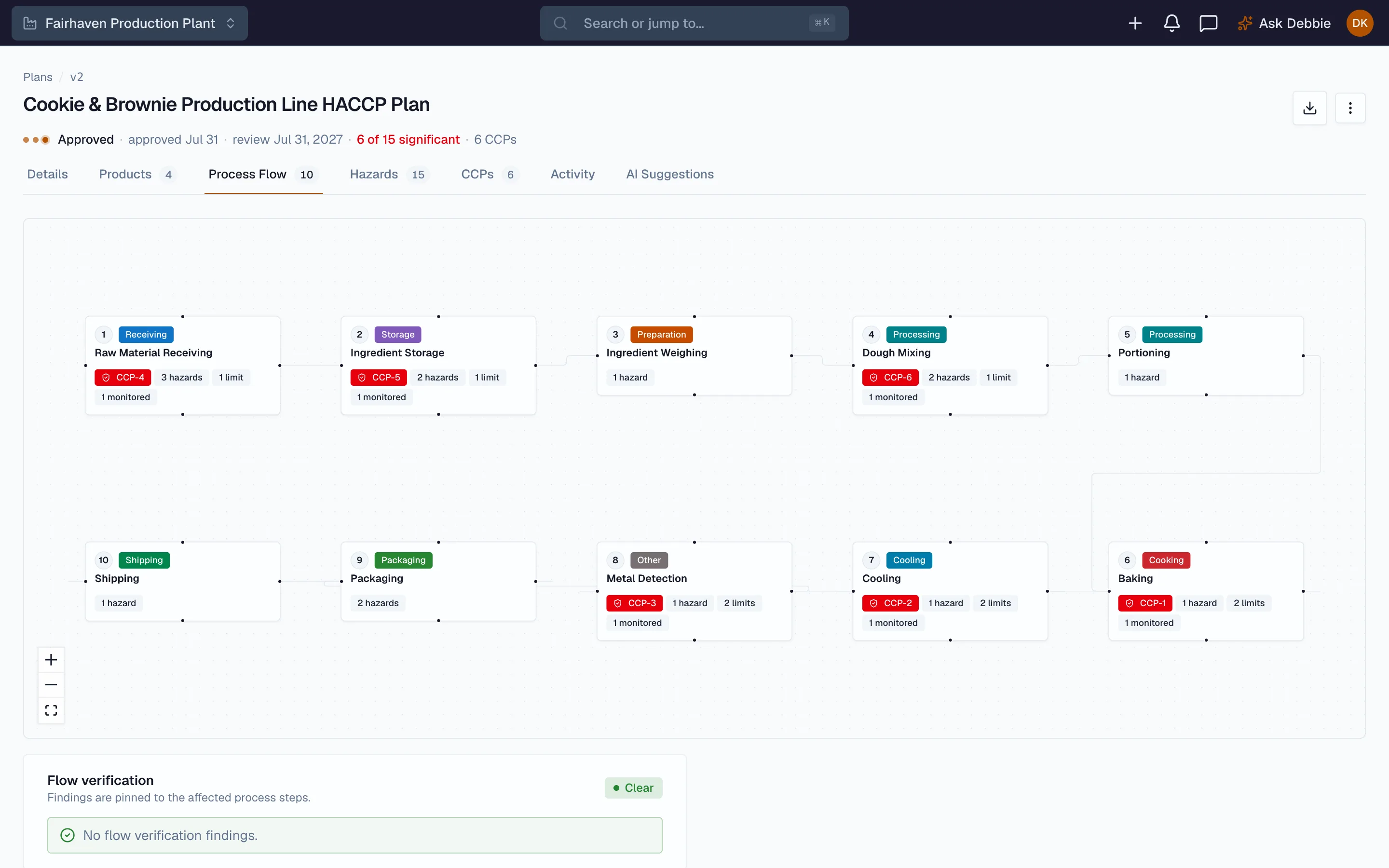
A plan that stays current, across all seven principles.
Hazard analysis drives your CCPs, your CCPs drive your monitoring, and your monitoring feeds your corrective actions and verification. When a process step changes, the linked records follow. The AI reads your process steps and suggests hazards with its sources shown; nothing joins the plan until someone on your team adds it.
- All seven principles on one linked plan
- Hazard to CCP to monitoring to verification, connected
- Reassessment scheduled, with review tasks when due
- AI drafts the analysis; your PCQI decides
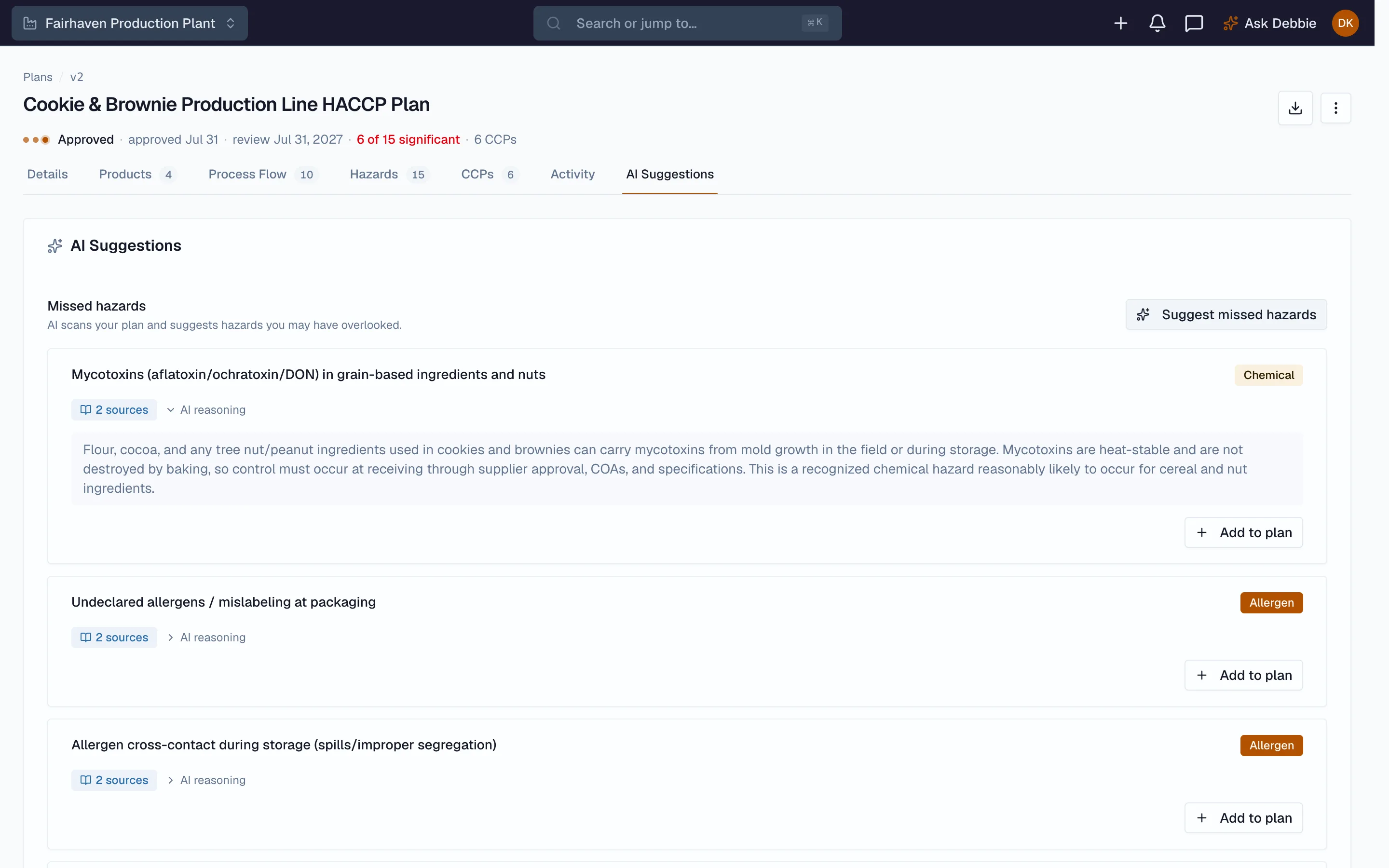
Allergen control that the line actually follows.
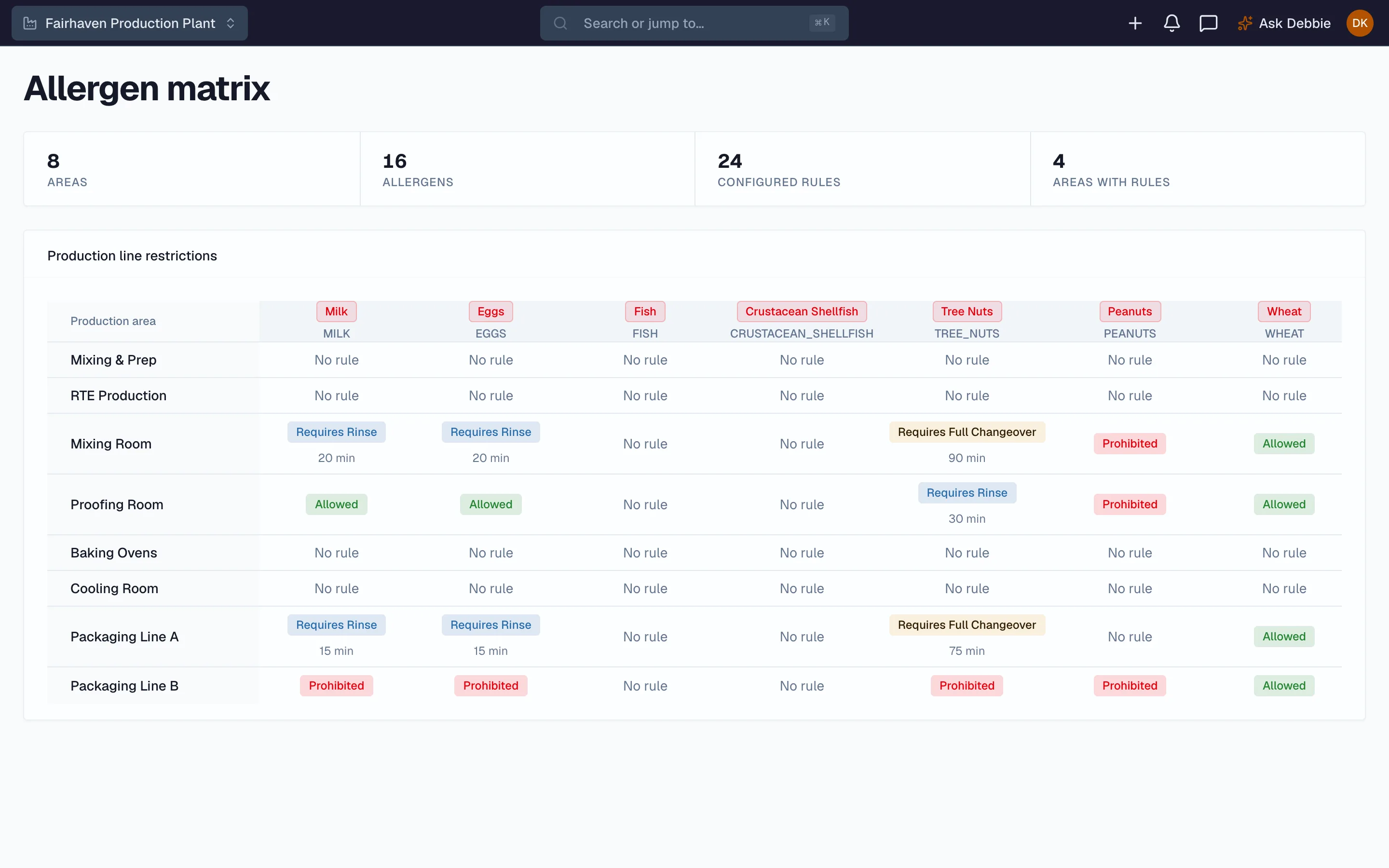
Allergen profiles live on your recipes, so changeovers, sanitation, and labels all read the same data. Each production area carries its own rule, from a timed rinse to a full changeover to prohibited outright. Environmental monitoring runs on sampling plans the system schedules, with out-of-spec results flagged the moment they land.
- Allergen profiles on recipes, changeovers, and labels
- Per-area rules the line reads before a changeover
- Environmental monitoring sampling plans and schedules
- Trend review ready for management review
Not just safety. Defense and fraud, too.
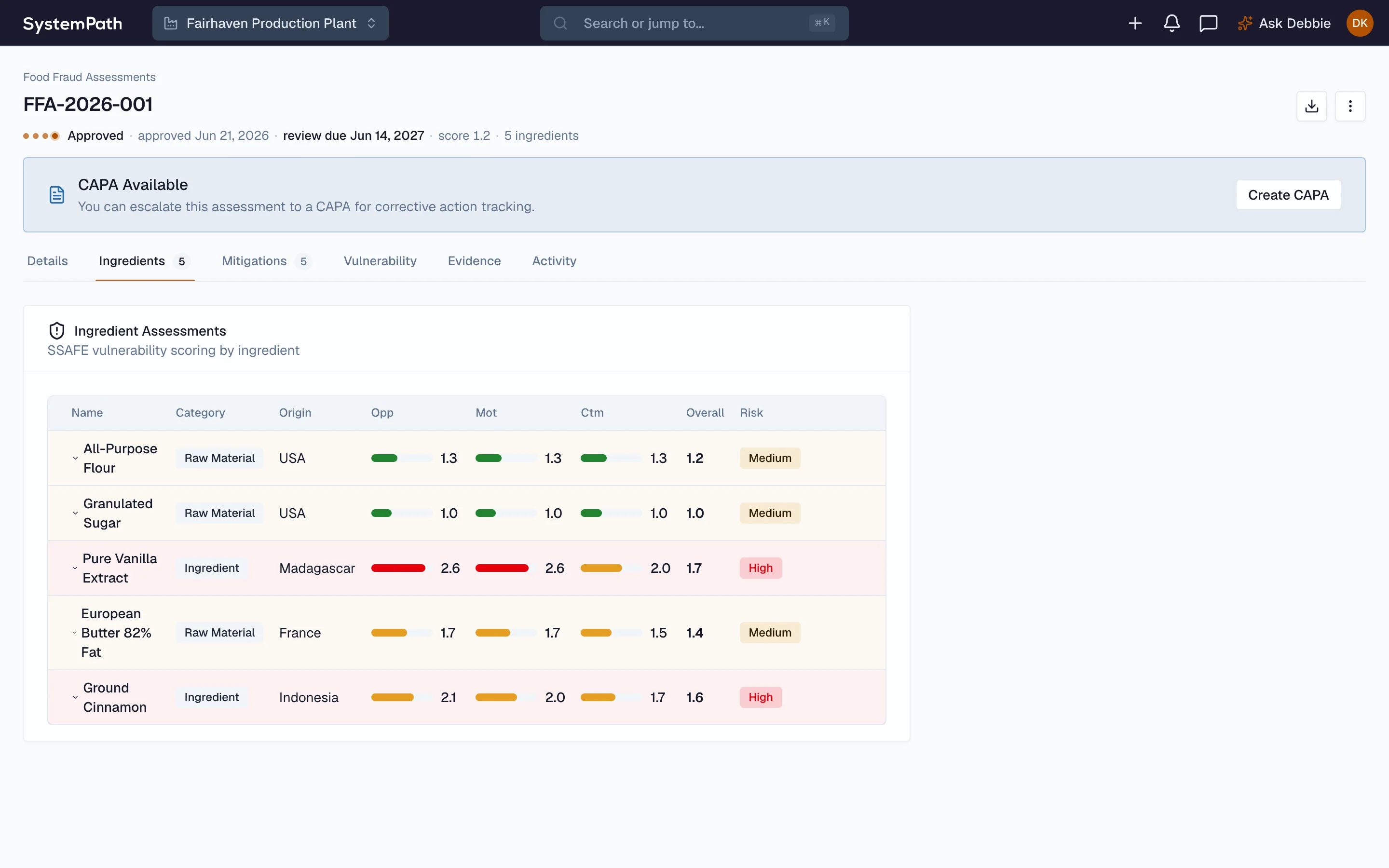
Food defense and food fraud are their own disciplines, and Beacon treats them that way. A vulnerability assessment scores each ingredient on opportunity, motivation, and countermeasures, so the sourcing risk in a vanilla extract from Madagascar is ranked rather than assumed, with mitigation strategies recorded against it.
- Ingredient vulnerability scoring with an overall risk rating
- Mitigation strategies recorded against each ingredient
- Food defense threats scored by area, with existing controls recorded
- The mitigation and monitoring the FSMA IA rule expects
Every food safety question an auditor asks, answered before they walk in.
These are cross-module questions. A point solution answers its slice; a program on one record answers the whole question, from the hazard analysis behind a CCP to the culture score Edition 10 expects.
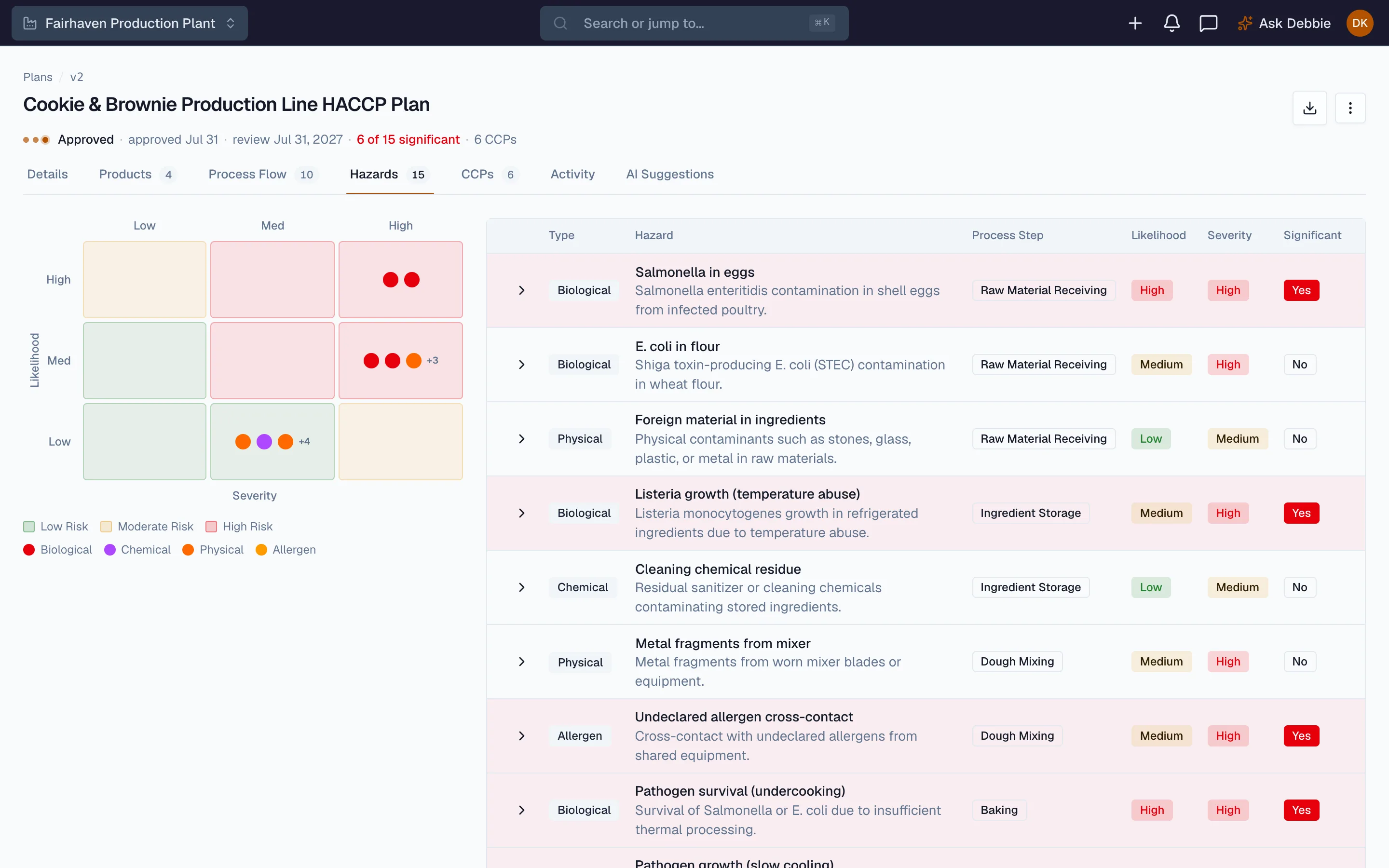
Every hazard carries its likelihood and severity rating, the justification your team recorded, and the process step it belongs to. The CCP determination is traceable back to the analysis that produced it.
Explore Hazard analysis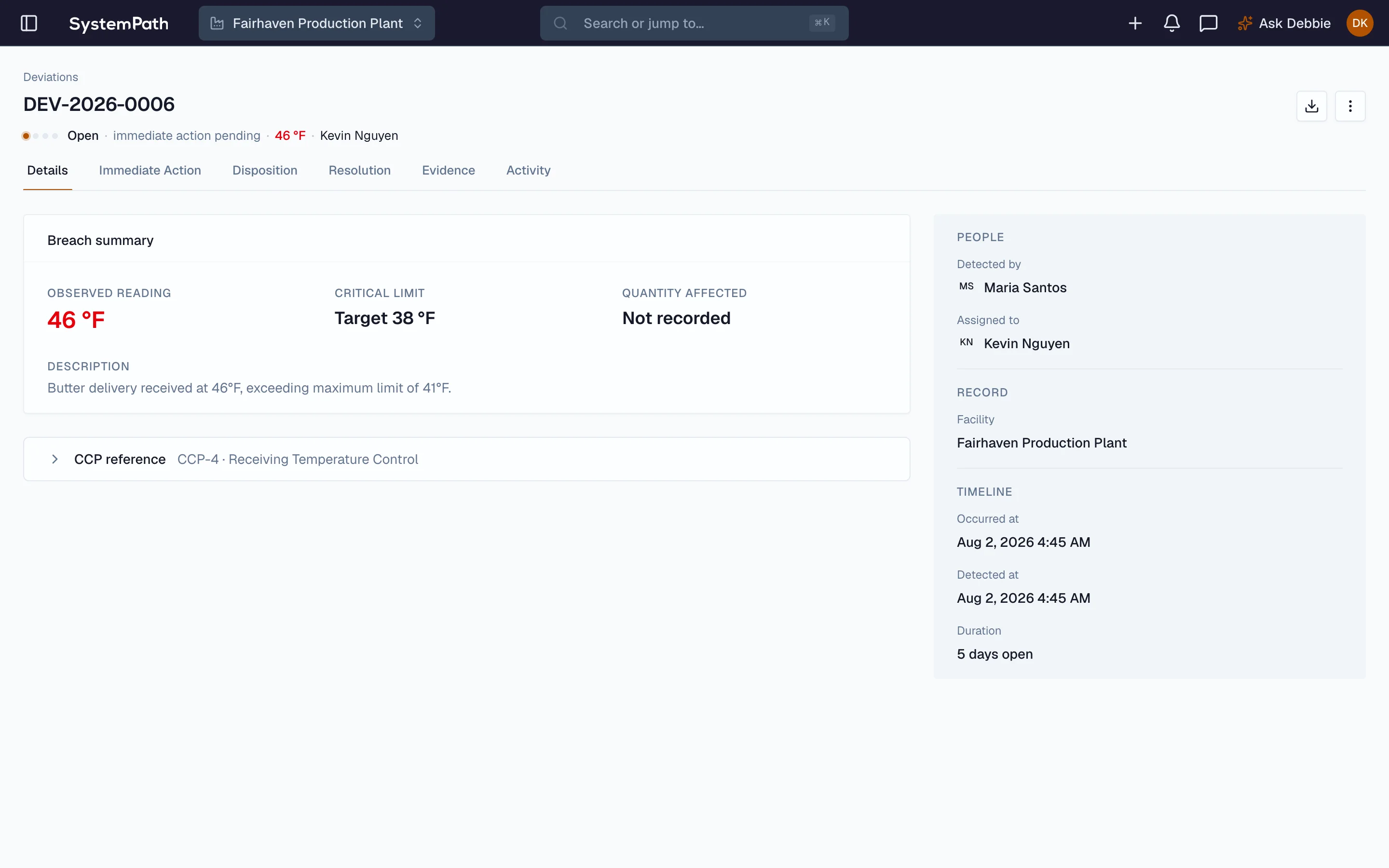
The deviation shows the reading against the limit, the immediate action, the product disposition, and the corrective action drafted from it for your team to review. It does not close until each of those is recorded.
Explore CCP monitoring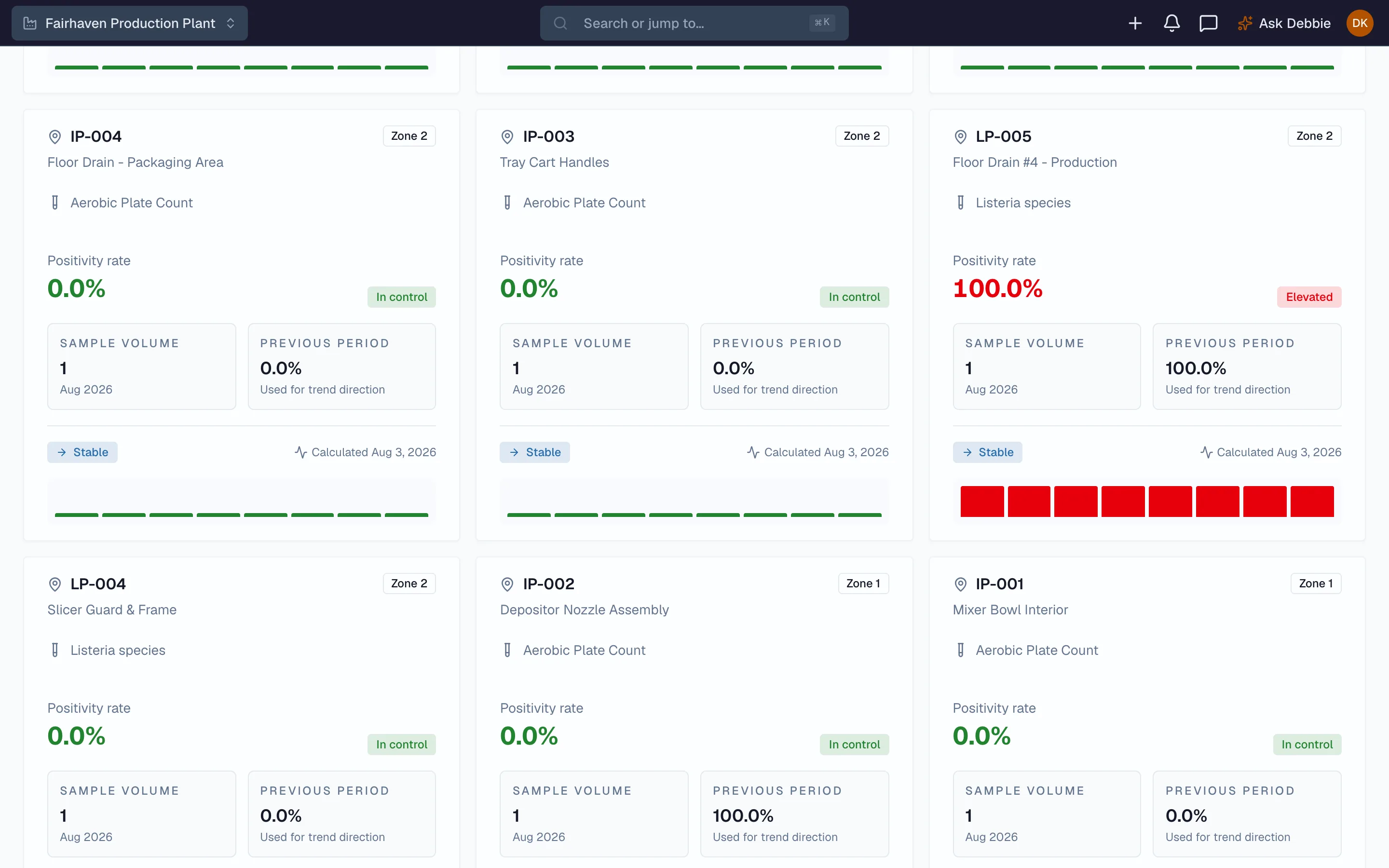
Swab results chart by zone and site, and the trend review is a record rather than a memory. When the auditor asks what you did about drift in zone 2, the review and the follow-up sit on the same trail.
Explore Environmental monitoring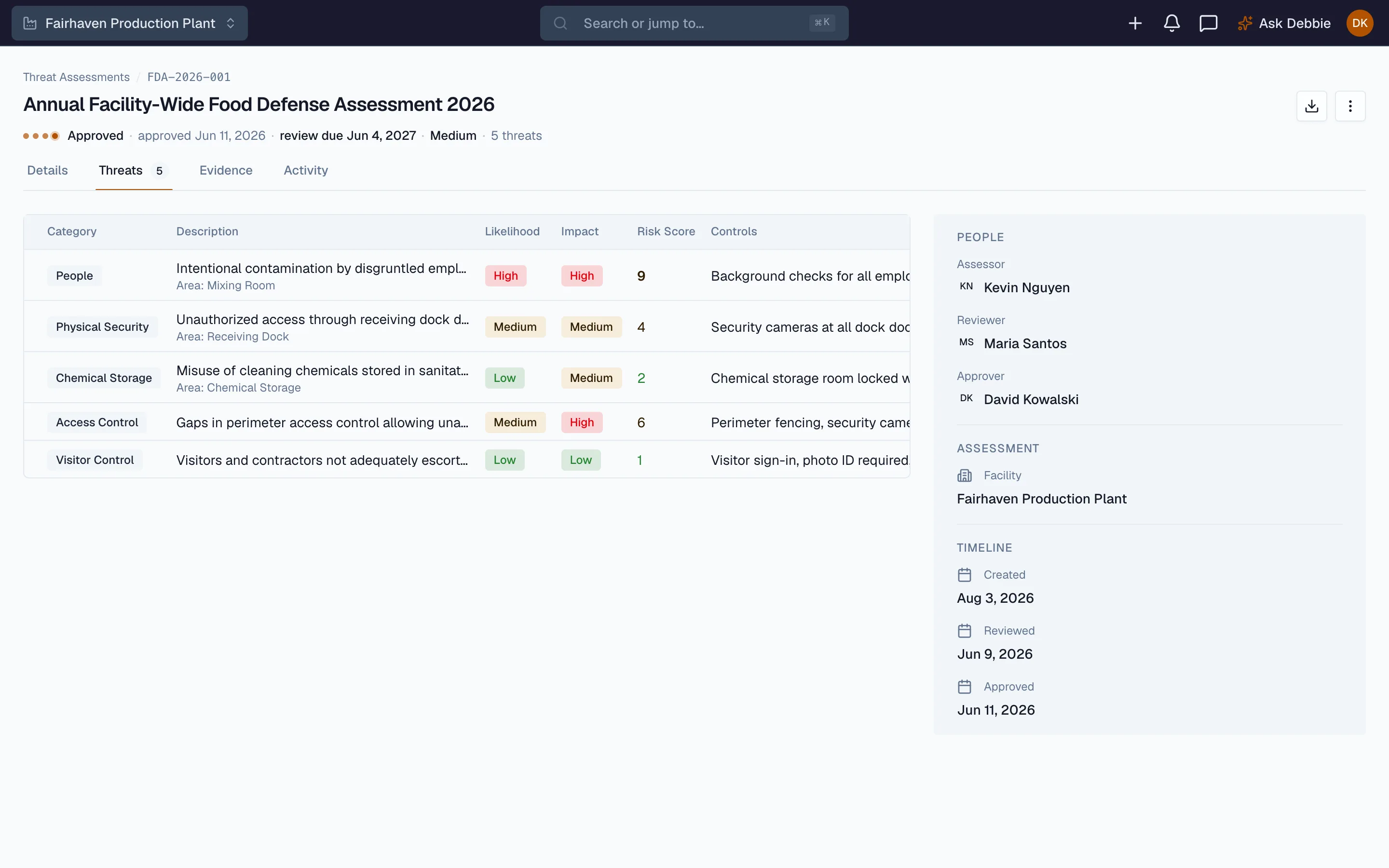
Each threat is scored by likelihood, impact, and a risk score against the facility area it belongs to, with the controls already in place recorded beside it. Threat categories run from people and physical security to access and visitor control.
Explore Food defense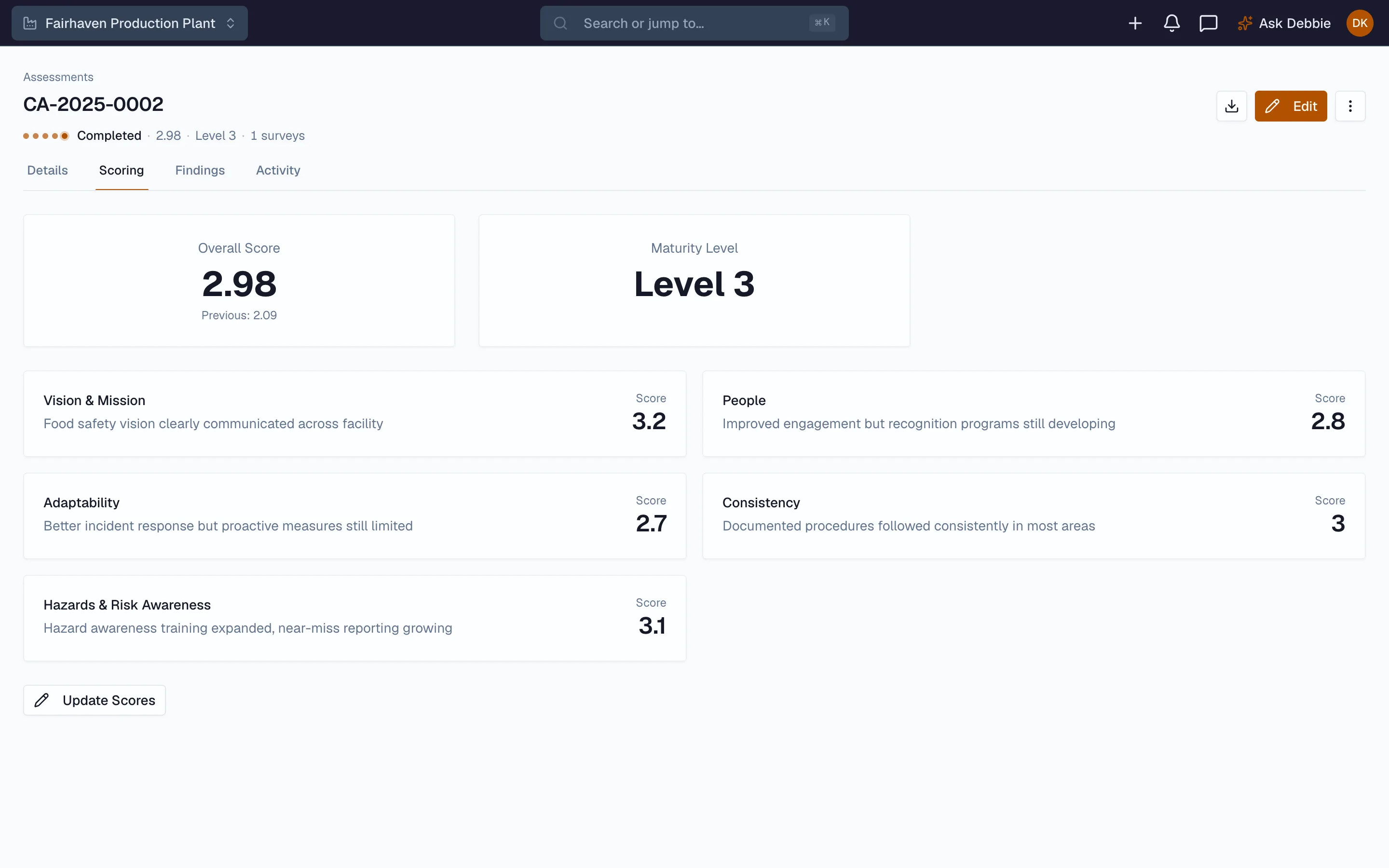
Culture assessments score maturity over time against the previous assessment, culture plans track the activities and metrics you committed to, and employees can raise concerns anonymously. That is the evidence Edition 10 expects.
Explore Culture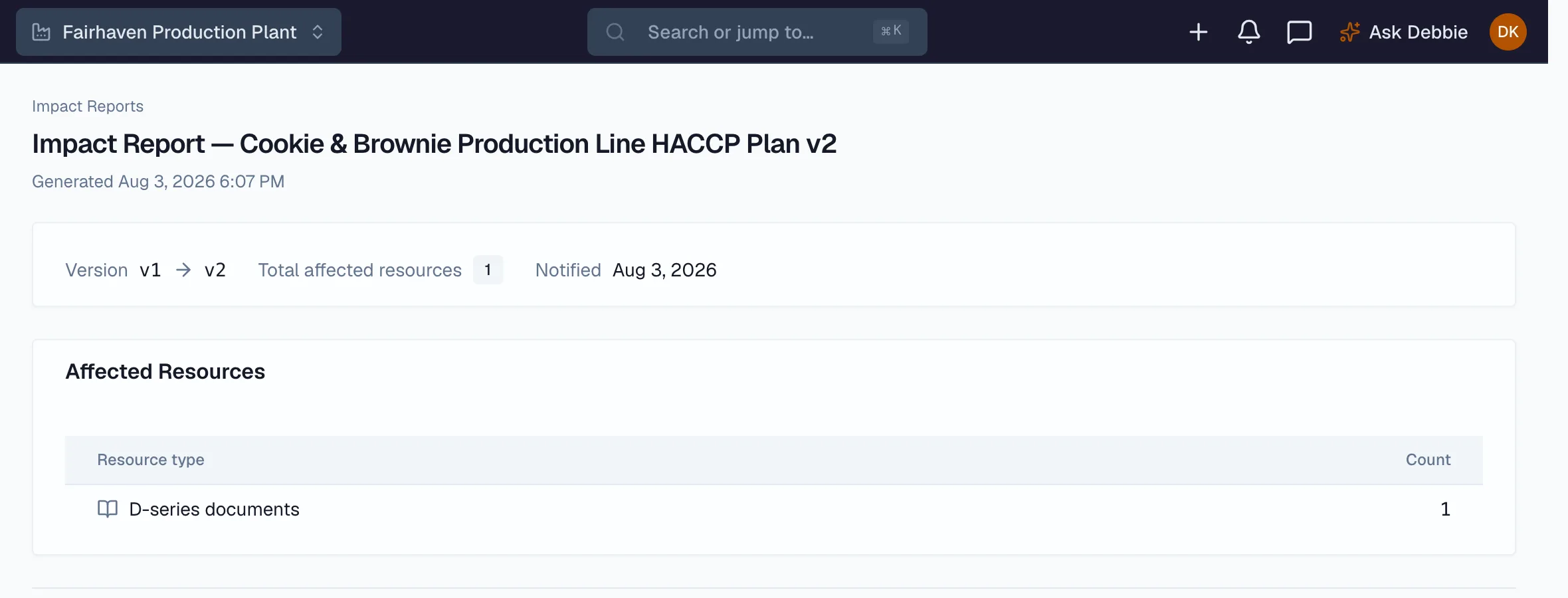
Approving a plan change produces an impact report: the in-flight form records, the training programs tied to the CCPs that changed, and the documents the new version reaches. Retraining is flagged for you rather than remembered.
Explore Change impactSee your food safety program on one record.
A 20-minute walkthrough on real data, from hazard analysis to audit evidence, scoped to your products and your process.
Prefer the phone? (313) 484-4887
What happens next
Discovery call
About your products, your process steps, and your audit calendar.
Live walkthrough
A hazard analysis built live, and a deviation followed to its evidence.
Custom proposal
Software, consulting, and training sized to your operation.
You'll talk with a food safety expert, not a sales rep.
20 minutes · No commitment · No pressure
Questions food safety teams ask.
Answers from the team that runs Beacon inside a working SQF-certified plant.
No, and you should be wary of any tool that says it can. Beacon's AI reads your process steps and suggests biological, chemical, and physical hazards from your product category, then drafts a plan to start from. Every CCP, every critical limit, and every corrective action is your HACCP team's to review and approve, and each AI suggestion leaves an evidence record. The AI gives you a head start, not a plan you have to trust blindly.
Allergen profiles live on your products and recipes, so a changeover, a label, and a sanitation step all reference the same allergen data. When a recipe changes, the allergen matrix updates and the related sanitation and label checks follow. You are not maintaining a separate allergen spreadsheet that drifts out of sync with what the line is actually running.
The system alerts the right people immediately and opens a deviation record that requires the cause, the corrective action, the product disposition, including holding affected lots, and the preventive measure. The record links to the CCP, the monitoring record, and any corrective action, and it does not close until each requirement is met.
Yes. Under 21 CFR 117 a Food Safety Plan is broader than a HACCP plan: process preventive controls sit alongside allergen, sanitation, and supply-chain controls and a recall plan, and not every preventive control has a critical limit. Beacon's hazard analysis, monitoring, deviation, and verification records carry your process preventive controls the same way they carry CCPs, and the allergen, sanitation, supplier, and recall programs are their own modules on the same data. A PCQI and a HACCP team work in their own vocabulary without keeping separate systems.
Beacon runs a facility-wide vulnerability assessment. Each threat is scored for likelihood and impact against the area it belongs to, across categories like people, physical security, access control, and visitor control, with the controls already in place and the recommended actions recorded on the assessment. Mitigation strategies, drills, and scheduled reviews live on the same record. Food fraud is handled separately, with per-ingredient vulnerability scoring and its own mitigation strategies. If your operation needs the assessment framed by process step under FSMA's Intentional Adulteration rule, the SystemPath consulting team scopes that with you and the documentation lives alongside your food defense plan.
At least annually, and whenever a process, ingredient, or hazard changes. Beacon tracks the reassessment schedule and opens a review task when one comes due, showing the current plan alongside the changes, deviations, and corrective actions since the last review. Every decision is documented with its justification, which is the audit trail that shows the plan is actively maintained.
Yes. Culture plans track the activities and metrics you commit to, employees can raise concerns anonymously, and assessments score maturity over time, which is the evidence SQF Edition 10's culture requirement expects to see. It lives beside the rest of the program, not in a separate HR tool.