
The plant floor, on schedule and on the record.
Sanitation, preventive maintenance, equipment, pest control, internal audits, and environmental monitoring run on digital checklists the system schedules, with a facility map that puts pest devices, equipment, and monitoring zones on the floor plan.
Checklists that get done, work orders that get closed.
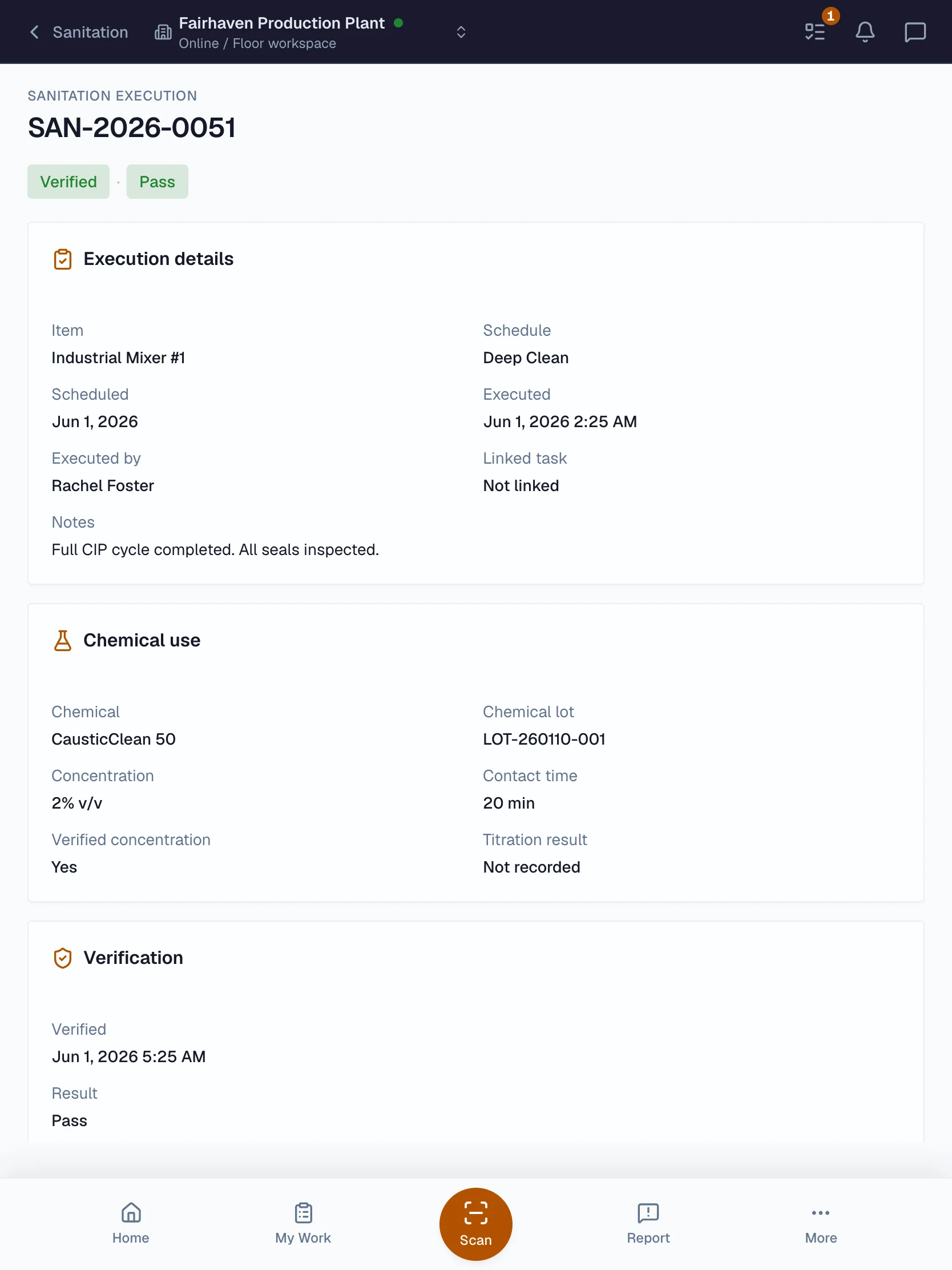
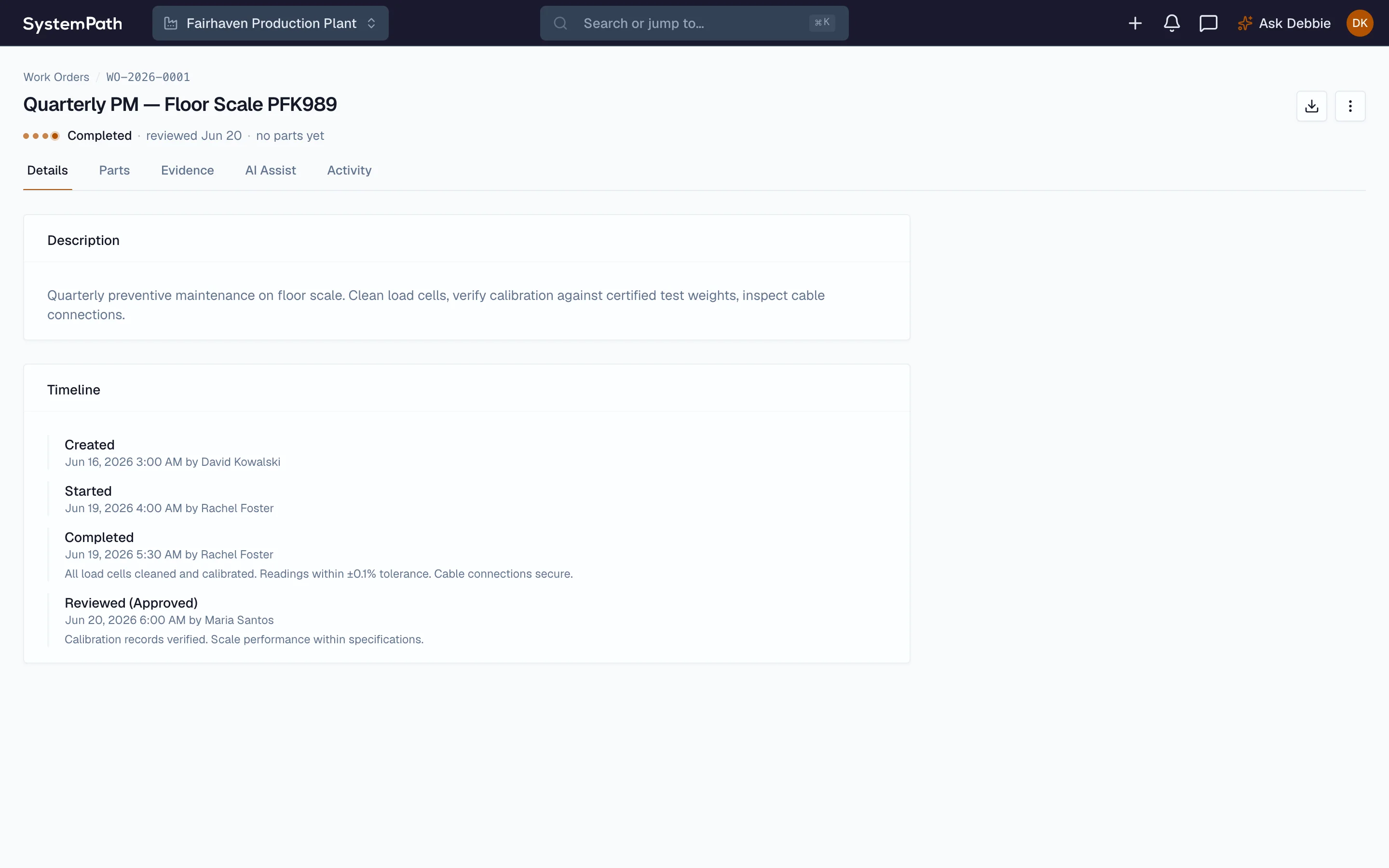
Sanitation runs on digital checklists at the point of work, on floor tablets and phones, with native camera capture for photos and sign-offs recorded live. Operators sign in with a PIN on a shared tablet and work in their own language, with every entry attributed to the person who made it. Preventive maintenance opens a work order when it comes due, assigns it, and tracks it through to a review by someone other than the person who did the work. The clipboard and the maintenance binder both go away.
- Sanitation and pre-op checks on tablets, with photos
- Preventive maintenance work orders per asset
- Raised, started, completed, and reviewed, each step attributed
- PIN sign-in on shared floor tablets, per-operator language
- Writes queued through brief connectivity drops, synced on demand
Find it yourself first, and fix it on the record.
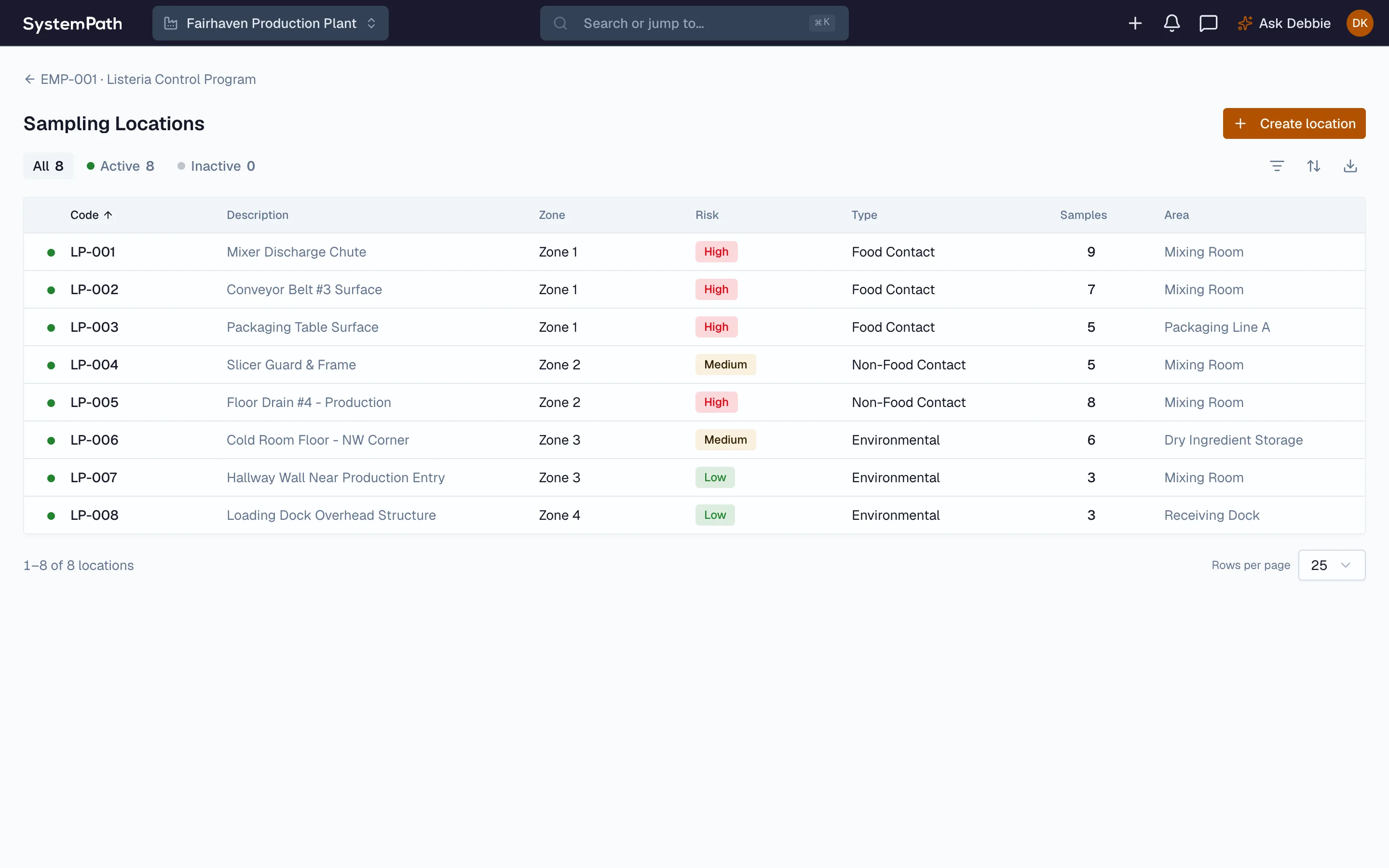
Environmental monitoring runs on a sampling plan: sites defined by zone and risk, swabs scheduled against them, and results recorded where the site lives. An out-of-spec result is flagged the moment it lands and opens a corrective action where the sample is configured to require one. Run internal audits against your own program the same way, and let a finding open a corrective action directly rather than becoming a line in a report nobody reopens.
- Sampling sites defined by zone, risk, and contact type
- Swabs scheduled against the plan, results recorded on the site
- Out-of-spec results flagged, with a CAPA opened where configured
- Internal audit findings that open corrective actions
- Trend data ready for management review
A recurring positive is a place, not a row.
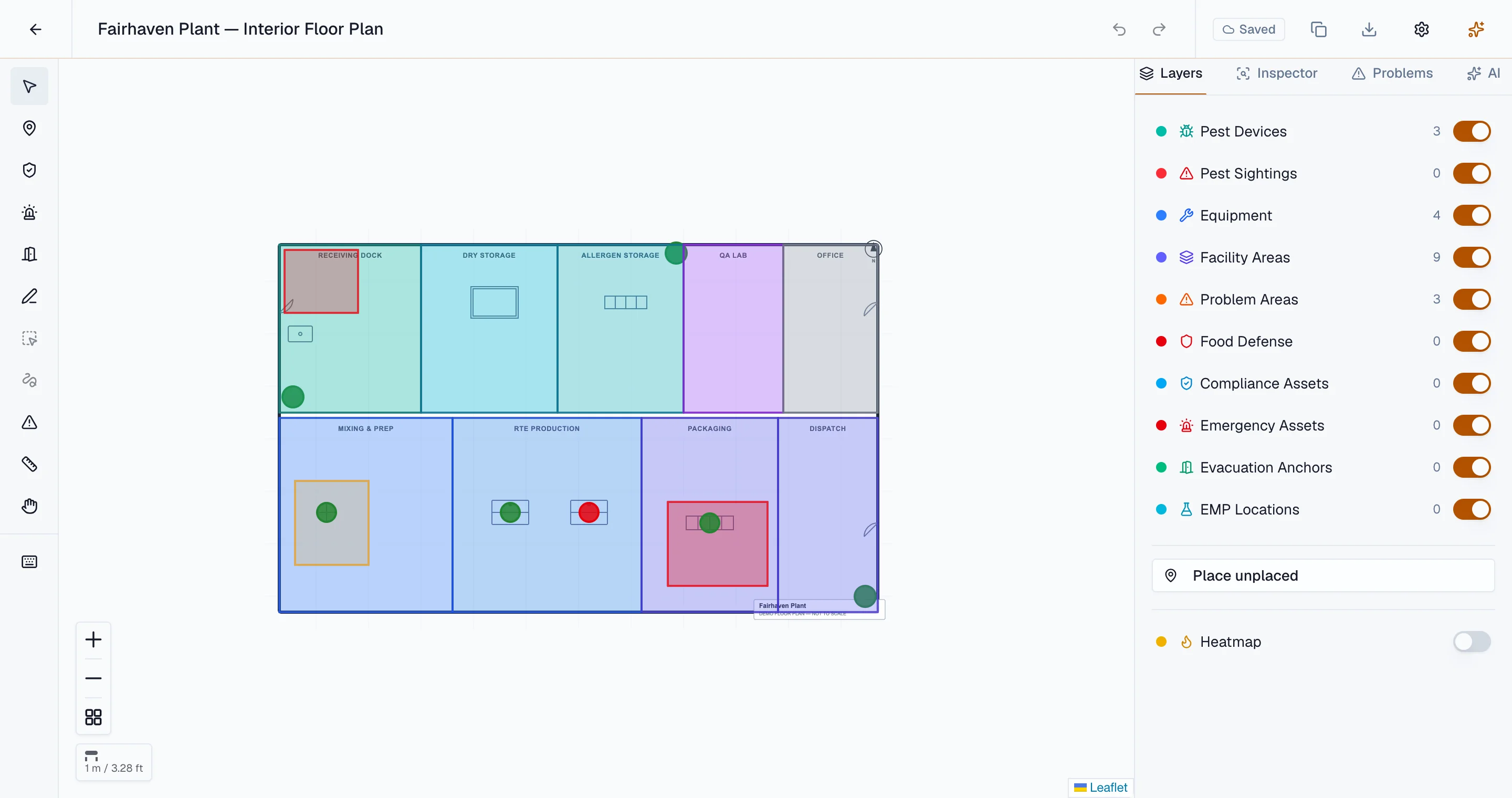
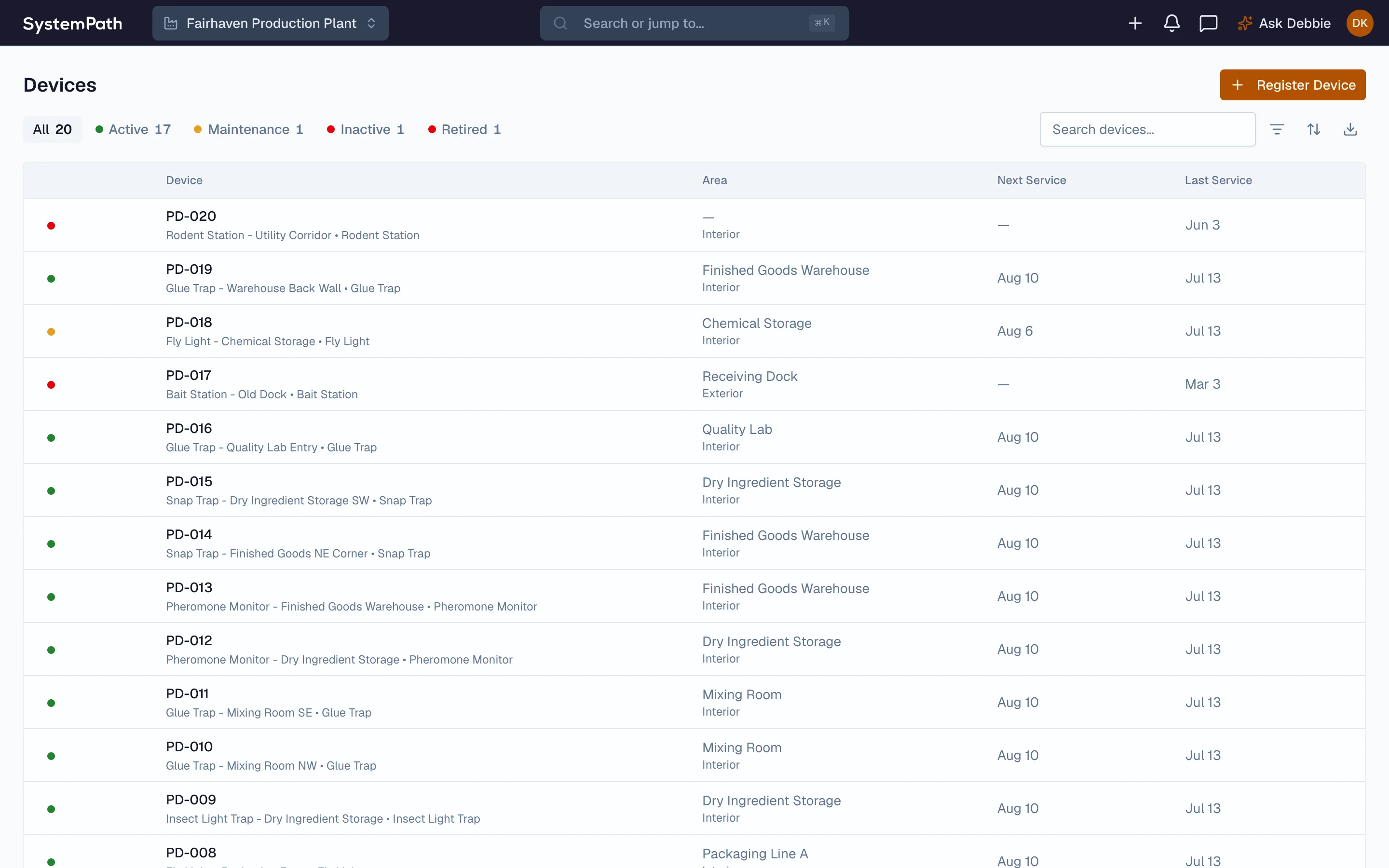
Pest devices, equipment, monitoring sites, and problem areas can be placed on the floor plan, on layers you turn on and off. A drain that keeps failing stops being a code in a spreadsheet and becomes a spot on the floor you can walk somebody to, next to the door it is near and the line it drains. When a swab site and a bait station share a corner, the map is where you notice.
- Pest devices, equipment, and monitoring sites on the floor plan
- Layers per record type, each with a live count
- Plant areas drawn once and reused across the program
- Problem areas marked where the issue actually is
Every floor question an auditor asks, answered before they walk in.
A plant walk is a sequence of spot checks: pick an item, ask when it was last done, ask what happened when it failed. The answers are only fast if the schedule, the record, and the follow-up are the same system.
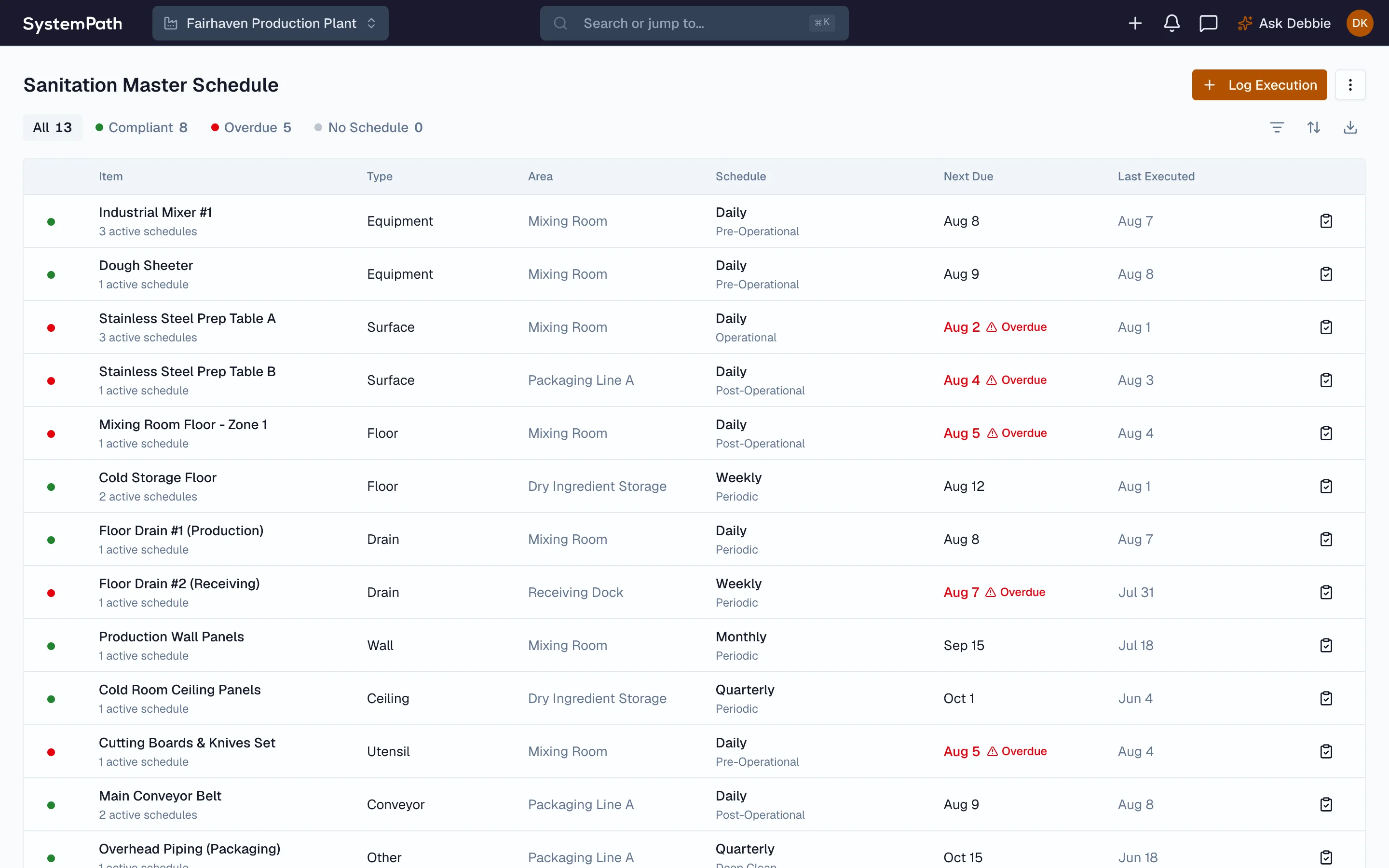
The master schedule carries every item, its frequency, when it is next due, and when it was last done, with anything overdue flagged in the list rather than discovered at the end of the month. A plant that is behind can at least see exactly where.
Explore Sanitation schedule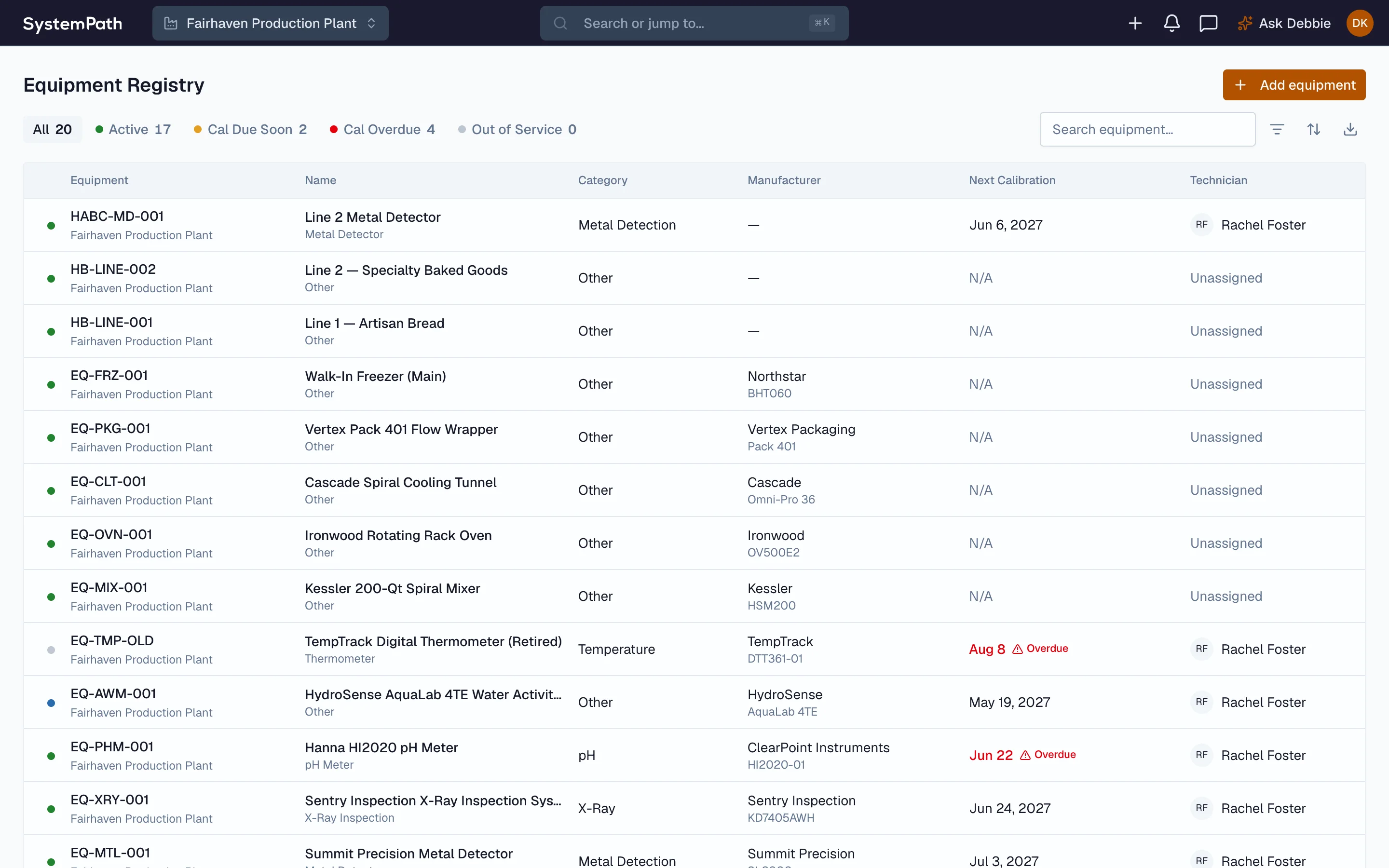
Every asset carries its category, its manufacturer and model, its next calibration date, and the technician who owns it. The instrument an auditor picks up is the one you can answer for on the spot.
Explore Equipment register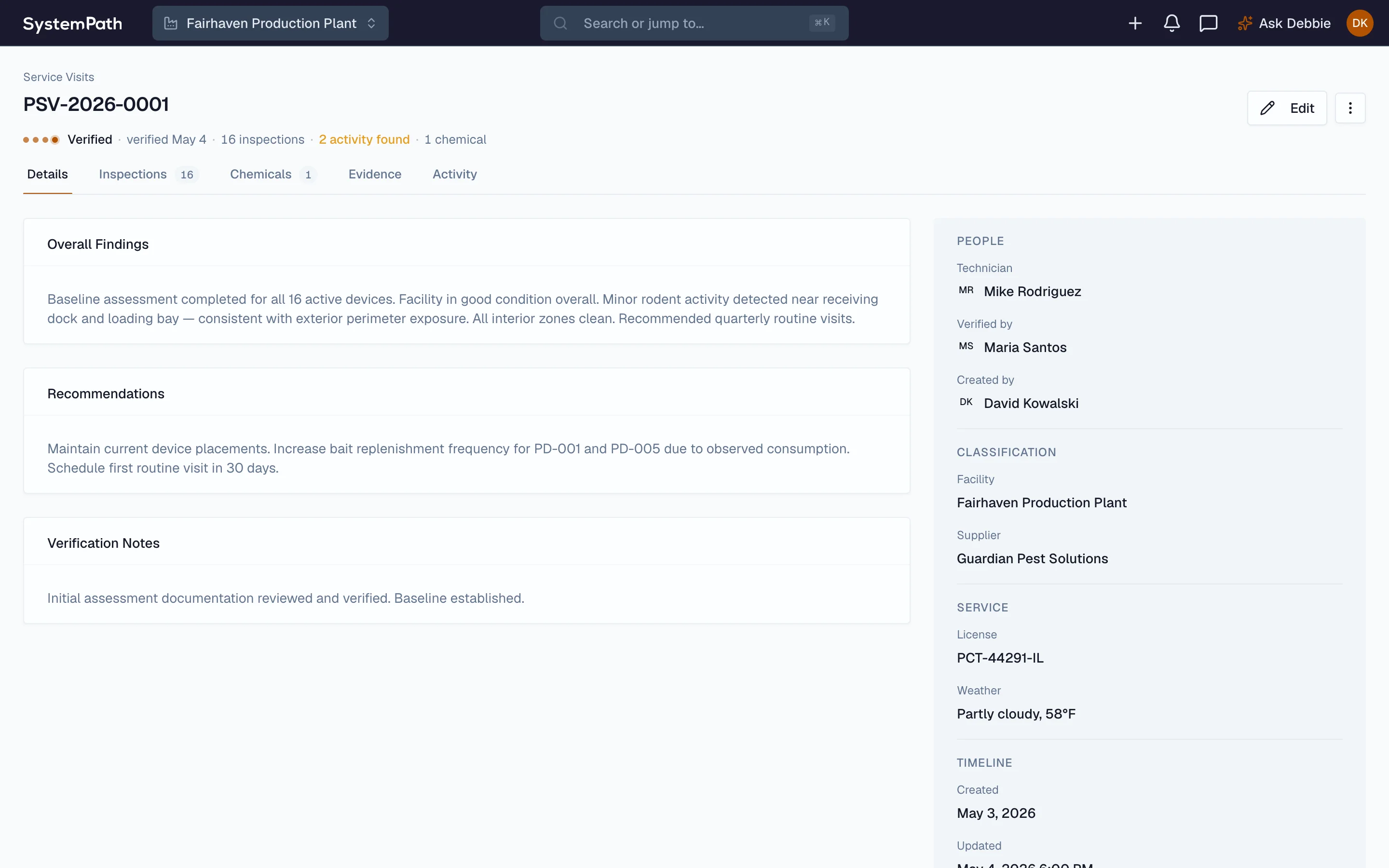
The service visit is your record, not your contractor's. What was inspected, what was found, and what was recommended is on the visit, so device history is answerable without waiting on a binder to arrive by email.
Explore Pest service visits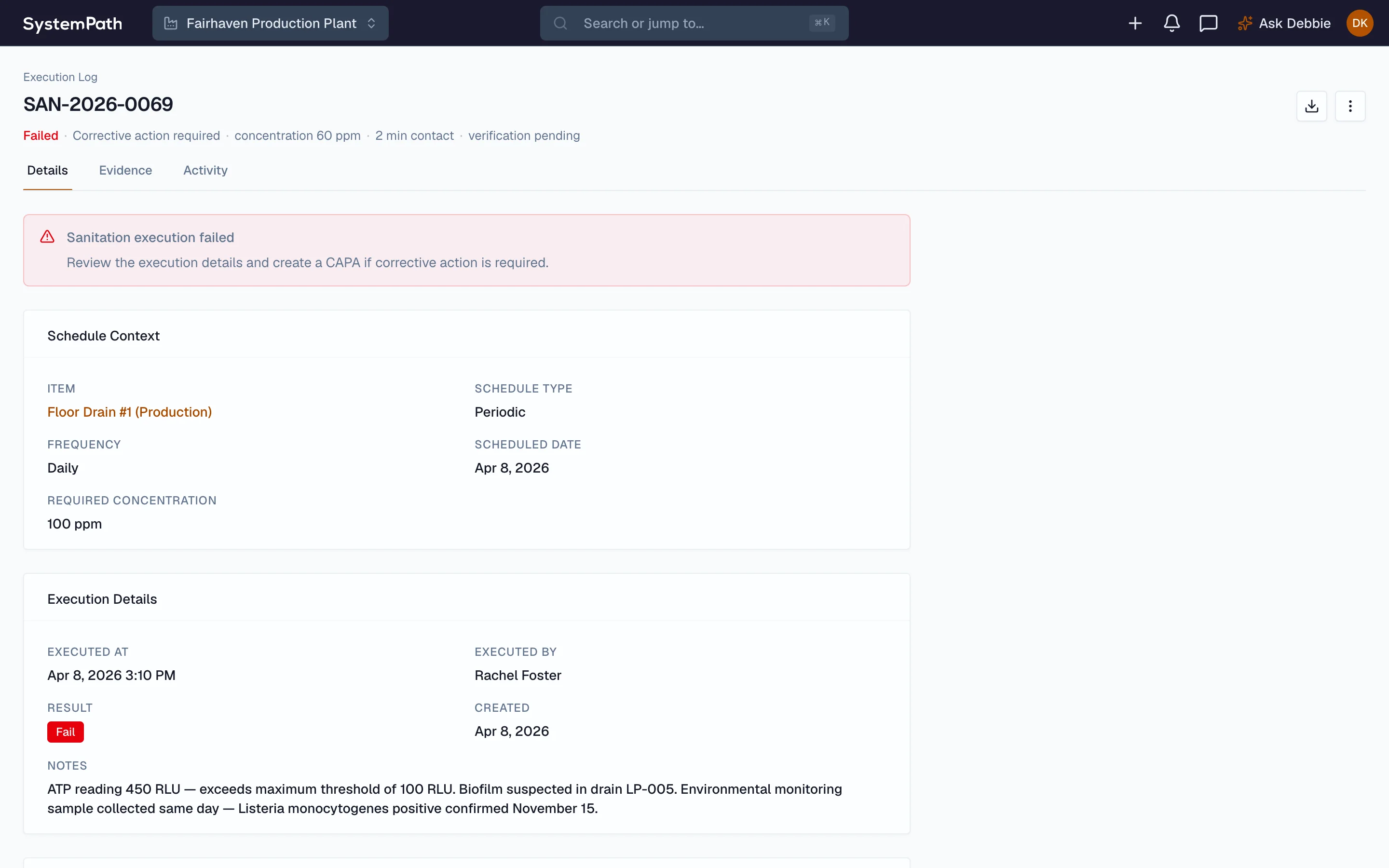
A failed sanitation execution records the reading against the threshold, what was suspected, and the corrective action it requires, on the same record as the schedule it came from. The follow-up is attached to the failure, not remembered separately.
Explore Failed checkSee the floor run on one schedule.
A 20-minute walkthrough of sanitation, maintenance, pest control, and monitoring on real data, shown at floor speed. Bring the schedule you keep now.
Prefer the phone? (313) 484-4887
What happens next
Discovery call
About your routines, your shifts, and what still runs on paper.
Live walkthrough
A check done on a tablet, and the failure it raises followed to its action.
Custom proposal
Software, consulting, and training sized to your operation.
You'll talk with a food safety expert, not a sales rep.
20 minutes · No commitment · No pressure
Questions plant teams ask.
Answers from the team that runs Beacon inside a working SQF-certified plant.
Sanitation, pre-op, and operational checks run on tablets at the point of work, with the same fields and sign-offs the paper version had. The record is complete and searchable the moment it is submitted, photos and all. There is no second step where someone keys a stack of clipboards into a system later, and nothing to dig out of a box when an auditor asks for last week's pre-op.
Floor forms queue their writes through brief connectivity drops and sync on demand, so a dead zone in a cold room does not scrap the check you just did. The experience is built for gloved hands and wet conditions, not a desktop ported to a small screen, and it runs on floor tablets and phones with native camera capture for evidence photos.
Preventive maintenance runs on schedules per asset, and the system opens the work order when one comes due, assigns it, and tracks it to completion. Calibration and maintenance history stay with the equipment, so when an auditor asks whether a critical instrument was calibrated on time, the record is on the asset, not in a binder in the maintenance office.
Environmental monitoring covers sampling plans, scheduled swabs by zone, result recording, and trend analysis. An out-of-spec result is flagged for investigation the moment it lands, opens a corrective action automatically where the sample is configured to require one, and the trend data is visualized for your management review. Zones can be placed on the facility map, so a recurring positive has a location, not just a row in a spreadsheet.
An allergen changeover triggers the sanitation steps and verification it requires, and the next run answers to it: when the previous run on that line carried an allergen the area restricts, the line does not start the next product until a signed changeover verification covers that transition. The verification is linked to the production run that follows, so allergen control is enforced at run start, not just recorded.
An internal audit finding can open a corrective action directly, with the finding as its source, and the action is tracked to closure with verification. The same is true for a deviation or a complaint, so every issue, wherever it starts, ends up in one place where you can see whether it was actually fixed.
Yes. Pest devices live on the facility map with scheduled inspections, service visits, and sighting records, and activity is trended against thresholds, so a station that keeps hitting gets a follow-up instead of a shrug. Device history is ready for the auditor without waiting on the binder from your pest contractor.